Category Archives: Film

Rimbaud/Rambo Homophone Blues

rambo-first-blood-part-ii

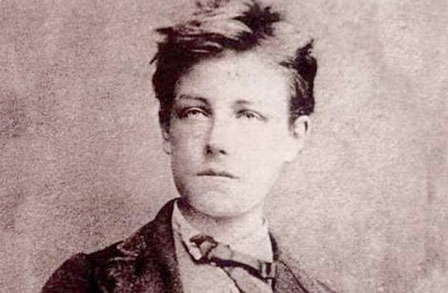
Gracious son of Pan! Around your forehead
crowned with flowerets
and with laurel, restlessly roll
those precious balls, your eyes.

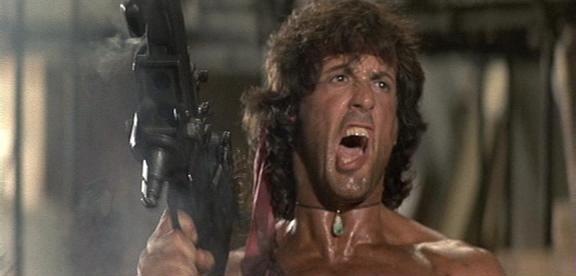
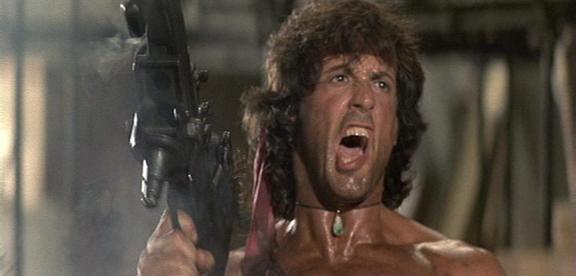
Nothing is over! Nothing! You just don’t turn it off! It wasn’t my war! You asked me, I didn’t ask you! And I did what I had to do to win! But somebody wouldn’t let us win! And I come back to the world and I see all those maggots at the airport, protesting me, spitting. Calling me baby killer and all kinds of vile crap! Who are they to protest me? Who are they? Unless they’ve been me and been there and know what the hell they’re yelling about!

Spotted with brown lees, your cheeks are hollow.
Your fangs gleam. Your breast is like a lyre,
tinklings circulate through your pale arms.

For you! For me civilian life is nothing! In the field we had a code of honor, you watch my back, I watch yours. Back here there’s nothing

Your heart beats in that belly where sleeps the double sex.
Walk through the night, gently moving that thigh,
that second thigh, and that left leg.

Back there I could fly a gunship, I could drive a tank, I was in charge of million dollar equipment, back here I can’t even hold a job parking cars!

rimbaud-448

Author’s Note
It occurred to me that we pronounce the names Rimbaud and Rambo pretty much the same way – and I was tickled by the incongruity of the connection. I have folded Rimbaud’s poem ‘Antique’ in with Rambo’s lament from the movie ‘First Blood’ and I found that the synthesis produces an eerie integrity.

Class Act

sean_penn2b

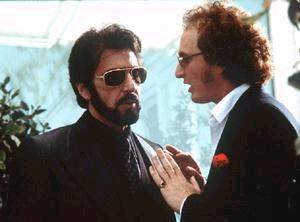
I’ve been watching a few movies at home just recently. A bit of a mixed bag but amongst them, ‘Carlito’s Way’.  (Brian De Palma 1993) I like to think that most people would agree that this is a very fine piece of film making. Al Pacino and Sean Penn play the leads, Carlito Brigante and Dave Kleinfeld. The action takes place in New York’s Spanish Harlem during 1975. Brigante has been released from prison after 5 years of a 30 year term because Kleinfeld, his lawyer, has discovered some technical deficiencies in the original case against him. As we are shown the film’s conclusion right at the beginning of the narrative, we are left in no doubt how it will all end for Carlito.

There’s much skill required from the director and scriptwriter to tell a story this way and still keep the audience wholly involved throughout the film – which is nearly 2 and a half hours by the way. And the direction and script are brilliant. But there’s more to it than that.
What Pacino and Penn bring to the screen is a sense of their characters’ history – their ontological existence if you like. Brigante and Kleinfeld existed before you sat down to watch the movie. What is happening to them now has its origins in the past and the way they have led their lives –  the decisions they have made. These actors have to find a way to convey the full extent of that past and how it impacts on the present in order for us, the audience, to agree to the compact with the film’s makers and suspend disbelief while the story unfolds. Pacino and Penn achieve this brilliantly. Their characters are transparent to us. The actors place nothing between themselves and the audience. Nothing is told but all is revealed. There is art but no artifice.
So we are in safe hands here. We can allow our critical faculties to take a break and use them later to engage with what we’ve seen and heard.

When I see acting of this quality, though, it brings into sharp relief, for me at least, the different types – or styles – of contributions that are made up there on the screen. Not everyone’s an actor. Not everyone can act. And quite often it’s not really necessary that they do. Some perform. And some just do impersonations or impressions of the characters they’ve been asked to play.

For instance, I think that Arnold Schwarzenegger is a performer, not an actor. And that’s okay. The films that he makes are vehicles for his particular talents and his on-screen presence. Hard to imagine ‘The Terminator’ being anyone but Arnie, isn’t it? It’s a matter of degree with performing though. Arnie’s right at the top of that list but there are hundreds of performers who tilt their lance at the windmill of acting. Amongst these notables I count Laurence Olivier, who never, in my experience, was able to impart a sense of an inner life to any of his characters. He seemed to me always to be an empty vessel perpetually in character but with no personal stake in the role. The Peter Sellers of tragedians, far exceeded in talent and capability by Gielgud, Richardson and Scofield from that generation.

Then there are the impersonators. Those who have a trick bag full of affectations, ticks, twitches, half-smiles and phony accents to gull the movie-going audience into believing the sincerity of their impersonation of a character. Meryl Streep is top of that list. From Lindy Chamberlain to Margaret Thatcher, Streep has cobbled together a battery of mannerisms and expressions that have made her utterly unwatchable for me since ‘Kramer vs Kramer’. John Malkovich and Philip Seymour Hoffman are equally as annoying and tiresome. All of these simply cannot stop acting. Their presence is eternally informed by their duty to acting. If they say one thing to me it is, ‘Look at me, Look at me. I’m an actor. I’m acting now.’ They make me want to reach for something with Gene Hackman or Vanessa Redgrave, Jessica Lange or Brendan Gleeson. Something like ‘Carlito’s Way’.

rambo-first-blood-part-ii


Hitting The Wall – Movie Review

Editors-Pick-The-Spy-Who-Came-in-From-The-Cold

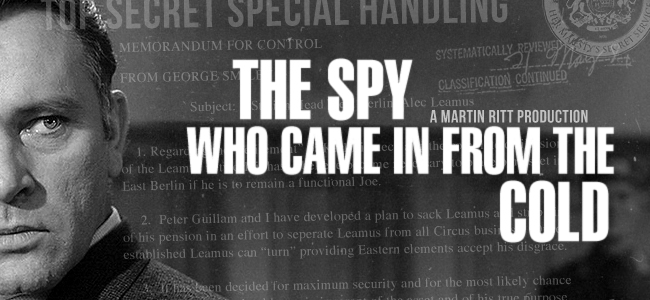
I got hold of a crisp new print of Martin Ritt’s 1965 Cold War movie just recently and watched it last week. Based on John le Carré’s novel written two years earlier and starring Richard Burton and Claire Bloom, it is compelling viewing. I should say that I’ve never really been an admirer of Burton but his reading of Alec Leamas,  an MI6 agent, is brilliantly achieved and ultimately moving. His performance has clung to me and convinces me to write.
Leamas is station chief in West Berlin where things have not been going well. The story begins with Leamas awaiting the return of one of his spies from the East. Although nothing is said, the stark, rain-swept streets around Checkpoint Charlie reflect the glistening desperation in Leamas’s eyes and we know this scene isn’t going to end well.
Soon, Leamas is back in London where subtle, powerful men have designed a dense plot to discredit Mundt, the East German spymaster who is the cause of Leamas’s desperation. Leamas has to create a convincing cover story so that he can credibly defect to the East and spread disinformation, once accepted as genuine.
I will not dwell on the plot any longer, having given the gist of it, so that any reader encouraged to watch the movie will still have many tunnels of this psychological and political labyrinth to explore. Suffice to say that Leamas encounters ingénues, ideologues, thugs, traitors and much else before he comes face to face with the Berlin Wall again.
Throughout, Ritt’s direction and Burton’s acting are designed to incrementally reveal the layers of Leamus’s history and character as he tries, in turn, to finesse or bludgeon his way through the historical and present layers of treachery and deceit that inform his world. That we are never told – but only shown –  how this story unfolds, is a lasting tribute to the director and actors of this fine film. I commend it to you without reservation.

Splat

Author’s Note
It occurred to me that there are some similarities between this film and the work of John Sayles. The numerous sub-texts examine personal, professional, political, local, national and international relations and boundaries. The lies that we tell serve only to guide us toward a universal truth in our quest for identity. Complex stuff.

A Wolf In A Drab’s Clothing. Movie Review

untitled

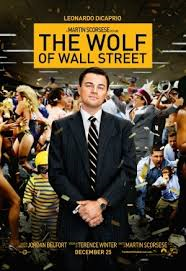
‘The Wolf of Wall Street’ (2013) might have been the first mainstream pornographic masterpiece. The story of Jordan Belfort’s adventures and misadventures in the greedy 80s needed its protagonist to be a hard core Gulliver adrift in a sea of sexual and sensory excess. It needed the decadence to be graphic and real. We needed to see the labia and the epithelium. We needed to feel the pain and pleasure of drug-fuelled coitus. We needed to see the degradation and desperation of the unemployed and the evicted as The Wall Street gluttons gorged themselves on anything and anybody within reach. ‘La Grande Bouffe’ meets ‘Wall Street’ meets ‘Boogie Nights; meets ‘Fear and Loathing’ in a private booth with a box of tissues nearby.

It needed an Andy Warhol or a Kenneth Anger to deliver on its orgiastic promise. Instead we got a jaded Martin Scorsese. And we got naked women but no naked men. No courage and no conviction. Hollywood production code morality. ‘Cunt’ and ‘cock’ in the script but not on the screen – except some long-shot pudenda – and I use ‘pudenda’ deliberately – because it was a shame. A great shame. And so the sex scenes and nudity seemed merely arbitrary, gratuitous and therefore, embarrassing. More embarrassing than those in ‘The Matrix Reloaded’. Especially the gay orgy which seemed to be in the movie for no other reason than it could be. Or maybe because Martin thought he was making a black comedy.

There are, of course, a few whizz bangs. Di Caprio’s selling hype to his assembled sales force and a sea storm enveloping the Wolf’s luxury cruiser are well managed and memorable. Most of it though, is predictable and boring. If you’ve seen ‘Scarface‘, ‘Blow’ and the movies mentioned earlier, you’ve seen it before and you’ve seen it done better. Scorsese’s powers are failing. ‘Shine A Light’ and ‘Shutter Island’ and now this. Even the soundtrack sucks. A lazy collection of mostly blues standards and random covers that bear no particular relation to place, time or action. Slick editing just means the lumps of disappointment don’t choke you.

Splat

The Economics of Crime ‘Killing Them Softly’ – Film Review

I watched this movie on the weekend and it’s rather stayed with me since then. It’s exhilarating meanness is quite deliberate, I think, and lends Andrew Dominik‘s latest exploration of criminality some integrity and traction.

Set in Boston, the story follows the characters involved in the ripping off of a mob-protected poker game. Driver (Richard Jenkins) is the cautious intermediary sent by the Mafia to look into things and restore order. He enlists the aid of Jackie Cogan (Brad Pitt), a cynical enforcer who has scant regard for the politicians fighting out the 2008 election that is the movie’s backdrop. Cogan tells Driver that the game’s proprietor, Markie Trattman (Ray Liotta) must necessarily be the first victim of the reprisals. Markie’s innocence or guilt is irrelevant. The punters must have confidence in the game and the mob’s ability to maintain security. There’s a recession and illegal gambling is also subject to the same financial crisis that shredded Wall Street in the autumn of 2008. Perception and market confidence is everything.

And so Dominik takes us into Cogan’s Dantesque world. We accompany the two young crooks, Frankie and Russell, whose everyday attitude to serious crime is eerily instructive, as they steal the gambling stakes in an unbearably tense scene that had me leaning anxiously forward, fearing the worst.
imagesCAE7D2T9
We meet ‘Squirrel’ (Vincent Curatola) who plans the heist and identifies Markie as a ready-made fall guy. We encounter Mickey Fallon (James Gandolfini), a played out contract killer, more concerned with excessive self-indulgence than helping Cogan. The mean streets of Boston are populated by the venal and the desperate.

What Dominik is showing us, through his fine script and direction, is similar to the analogy drawn by Coppola in The Godfather; that crime has a parallel dynamic to business; that its mores and rules are identical; that its outcomes are inextricably linked to the Share Price Index and the value of the greenback. As such, ‘Killing Them Softly’ is a convincing companion piece to ‘Margin Call’ which I reviewed last year In Wise Blood.

As for the performances – I especially liked Scoot McNairy and Ben Mendelsohn as the two young hoods. They bring a curious, quotidian flavour to their portrayals that sits well inside the director’s bleak vision of routine wretchedness. Everyone else is fine. Brad Pitt is becoming a dab hand at psychotics; Achilles, Jesse James and now Jackie Cogan. He fills out his character with some recognisable quirks. He doesn’t like to get up close and personal with his victims because he can’t handle their anguish. He prefers distance. He bitches about politicians, the lack of community and about being short-changed by Driver. He provides the movie’s telling epilogue – ‘America’s not a country….it’s a business.’

Author’s Note
New Zealander, Andrew Dominik has previously directed ‘Chopper‘ and ‘The Assassination of Jesse James….’. The movie reviewed here is based on George V Higgins’ 1974 novel, Cogan’s Trade. It would seem that Dominik is well on his way to auteur status and I look forward to his next exposition on the state of the criminal union.

Cinéma vérité – Heart and Darkness. ‘Overlord’ – A Movie Review

Overlord is a black and white film made in 1975 by Stuart Cooper. It blends live action with documentary footage sourced from thousands of hours of film in the Imperial War Museum archives. The story begins in the final years of WWII, in England, and follows the fortunes of Tom, from his call-up and training to his D-Day arrival on the Normandy beaches.
overlord

Although the movie won the Silver Bear at the Berlin Film Festival, it received only a very limited release and has only recently been re-mastered onto DVD and gained the distribution and recognition it undoubtedly deserves.
I watched it a few days ago and the story and its characters have clung to me since then. It seems to me that the seamless union of documentary footage and transparent performance has produced a tender tragedy that reveals moments of truth about the human condition. The uncertainty of conflict accelerates both process and outcomes. Intimacies are exchanged within hours of an acquaintance being made. Profound realisations are made because fate is only the pull of a trigger away.
Tom is a decent young man. He is accepting of his harsh induction into Army life and soon befriends Arthur, a street-wise cockney and a (unnamed) young woman he meets at a dance. He shares with them his premonitions of death in the coming invasion. Yet he also writes to his parents about his pet spaniel’s delivery of a litter. There is a disarming knowingness about Tom – a sweet gravitas that is neither morbid nor cloying. It is what drives this story makes it compelling and ensures that its artlessness grants this production a good measure of truth.
Instrumental in achieving this work of art, are director, Stuart Cooper and cinematographer, John Alcott. Alcott, who was a frequent collaborator with Stanley Kubrick, was able to find and use some vintage, untreated German lenses and old Kodak stock so that his live footage resembled more closely the archival material. The resulting fusion is brilliantly achieved and creates an elliptical history in which the young leads, Brian Stimer (Tom) and Nicholas Ball (Arthur) exist both before the film starts and after it has concluded.
I recommend this fine movie to you without reservation.

imagesCA1MQ92T

Is Jackson Da Bomb?

Here’s the link to a piece from Casual Parking.
http://casualparking.blogspot.co.nz/2010/11/jackson-beaten-to-punch-on-dam-busters.html
wilson_parking

The British Way of Crime

I thought it may be interesting to have a brief look at the history of British crime films and pick a few to discuss. In the last 15 or so years there’s been an emergence of the British Gangster Film, strictly, a sub-genre of the crime film. The way was paved by ‘Get Carter’ (1971) and ‘The Long Good Friday’ (1980) for a niche to be carved out by Guy Ritchie with ‘Lock, Stock and Two Smoking Barrels’ (1998) and ‘Snatch’ (2000). These were quickly followed by such brilliant additions to the genre as ‘Sexy Beast’ (2000) and ‘Layer Cake’ (2004)

But in London during my early teens, most crime films were of American origin and the replays on the television were mostly James Cagney, Humphrey Bogart and Edward G Robinson vehicles from the 40s. There were, though, the B-features that frequently played prior to the main feature at the local flea-pit. There were the ‘Edgar Wallace Mysteries’ and the ‘Scotland Yard’ series – which was introduced by Edgar Lustgarten. These were cheap, black and white films that lasted 30 or 40 minutes. But their style and characterisations had a major influence on more ambitious projects during the 60s.

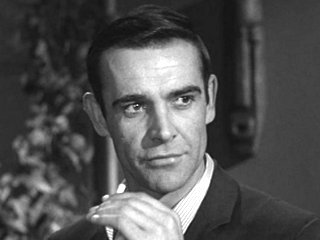
‘The Frightened City’ (1961) stars the young Sean Connery as an ambitious burglar who gets mixed up in extortion, protection and the turf wars of London’s West End. The black and white images are stark and reflect the corrupt and violent nature of the film’s criminal protagonists. It’s certainly not a great film but it does resonate with the influence of the emerging new wave, Melville’s ‘Bob Le Flambeur comes to mind, as well as providing an implicit commentary on the less wholesome aspects of emerging post-war prosperity. (Trivia hounds may be interested to learn that the theme music for this movie was successfully recorded by The Shadows, as was the theme music to the Edgar Wallace series – ‘Man of Mystery’)

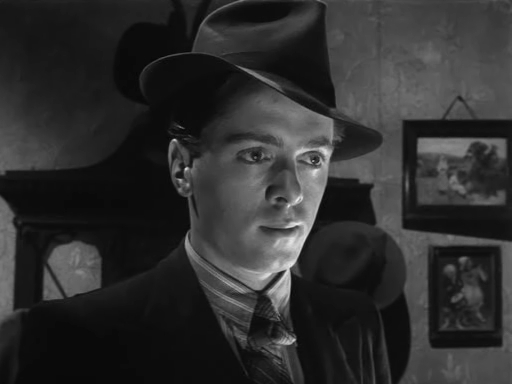
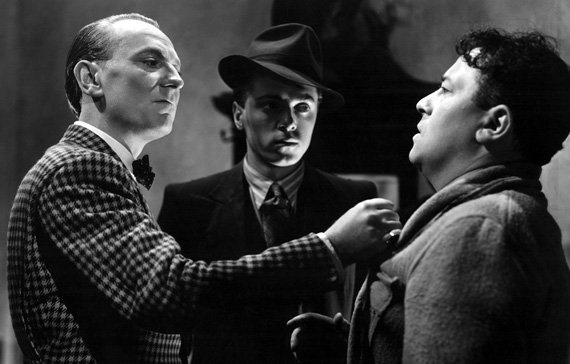
Some 14 years earlier in 1947, the most popular film in Britain was ‘Brighton Rock’. Based on Graham Greene’s novel and starring a youthful Richard Attenborough, the plot is centred around a criminal gang and their psychotic leader, Pinky (Attenborough). Although Greene’s familiar themes of good and evil, hypocrisy and the irony of redemption are present, the Boulting Brothers’ direction and Terrence Rattigan’s script peel back the layers of  between the wars Brighton, to observe the criminal underbelly beneath an effete facade. (The film was remade in 2010 by Rowan Joffe but with the action set during the Mods and Rockers battles of 1964.) And yes, that’s the very first Dr Who, William Hartnell, doing the threatening in the publicity still above.

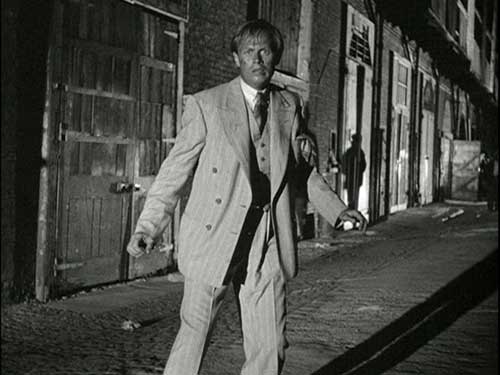
Although an American production, Jules Dassin’s film noir‘Night and the City’ (1950) was filmed on location in London and the city’s streets and characters entitle the film to a ‘British’ tag. This was Dassin’s first film in exile from Hollywood in the wake of the communist witch-hunts. The unremittingly bleak storyline, unsympathetic characters and savage finale are most likely a reflection of Dassin’s feelings at that time. Nevertheless, the film is now considered a masterpiece – and along with his ‘The Naked City’ (1948) and ‘Rififi’ (1955) entitles Dassin to be considered one of the greats.

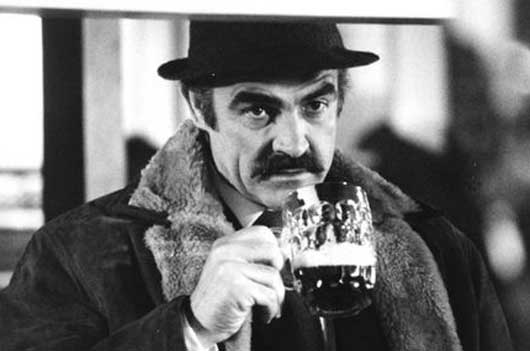
Connery again, completely cast against type as Johnson – a detective under pressure who beats a suspect to death whilst questioning him. ‘The Offence’ (1972) is a film by Sidney Lumet and evidences that director’s reputation as an auteur. What’s being examined here is the ambivalence of police work – a theme that Lumet would explore further in ‘Serpico‘, ‘Prince of the City’ and ‘Q&A’.

I watched this film again recently and Lumet’s direction of the two protagonists, Connery and Ian Bannen, is flawless. As the narrative intensifies, these two men, on opposing sides of the law, become increasingly indistinguishable. Ultimately, Johnson’s quest for truth brings forth a malignant guilt in himself. There is no redemption.  Connery made this film ‘under sufferance’ from United Artists who agreed to allow him to do it as part of the deal for him to return to the Bond franchise in ‘Diamonds are Forever’. It was a box office failure when released and has only recently been given a DVD release. I urge you  to see it.

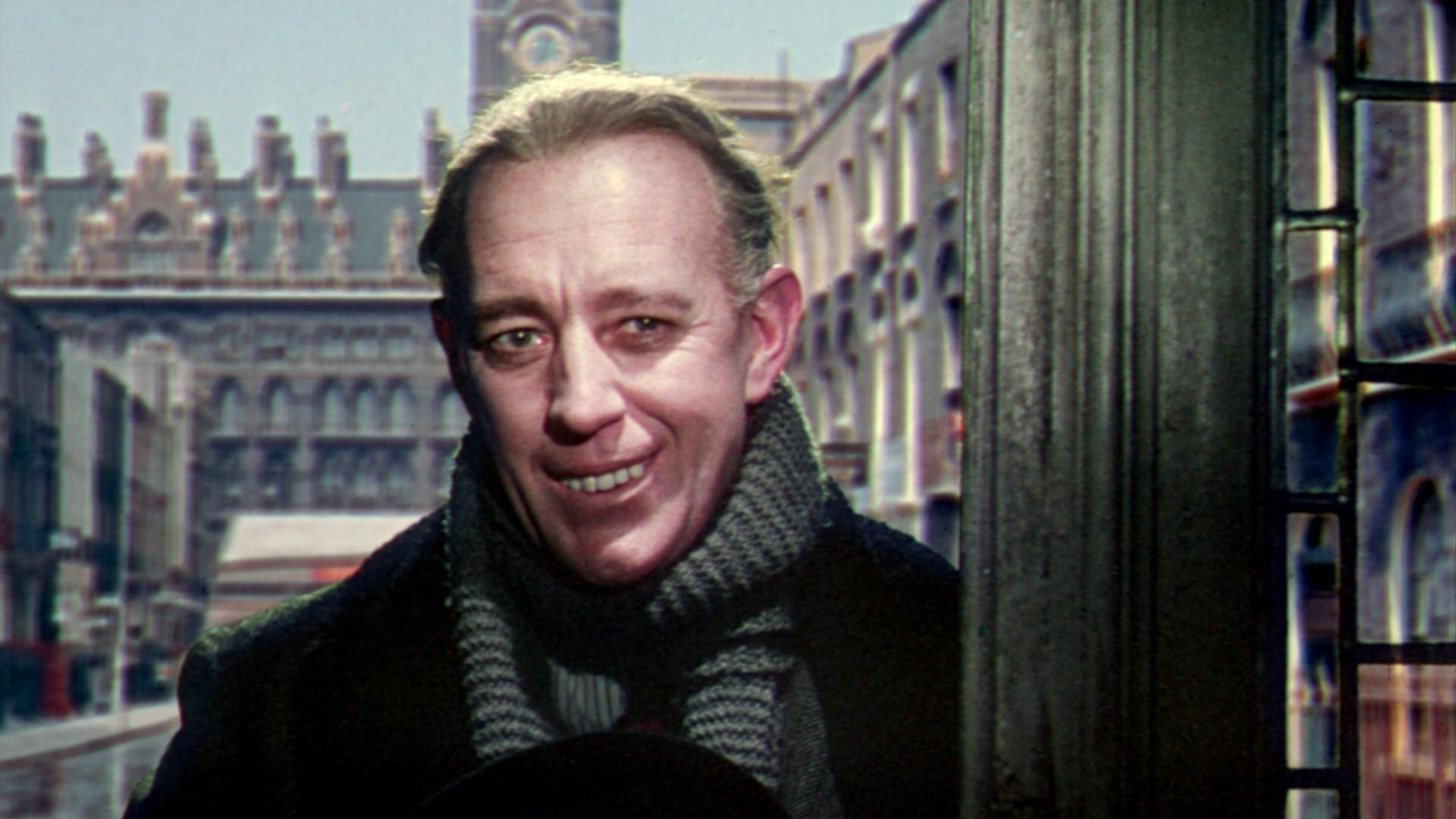
‘The Ladykillers’ (1955) is a black comedy directed by Alexander Mackendrick and starring Alec Guinness. The film provides an early role for Peter Sellers and also features the ubiquitous Herbert Lom, who specialised in crime lords and shady types. Guinness plays a sort of faux criminal mastermind who, together with his gang of incompetent robbers, is completely undone by a little old lady (Katie Johnson) whose house they lodge in whilst planning their dastardly crimes.
This is a sly movie and manages to carry off a good many public monuments and established stereotypes whilst allowing Guinness to display his comic talents –  as his character, Professor Marcus, gradually morphs into that great staple of British film comedy, Alastair Sim. (St Trinians, The Green Man, School for Scoundrels)

A Note From The Author
I will write about the more recent plethora of British Gangster Films shortly – but I thought readers may enjoy looking back at some of the templates for these more recent movies.

Ten Turkeys – Part II

In between posting Part I and preparing this, I was thinking about a couple of well-publicised massive bombs from Hollywood’s past.

Ishtar’ (1987) starred Dustin Hoffman and Warren Beatty and lost Columbia millions of dollars. I’ve never seen it and so cannot comment here – but I see a few respected critics thought very highly of it although the majority panned it. Certainly, given director Elaine May’s fine track record, the film’s failure is surprising.

‘Heaven’s Gate’ (1980) is Michael Cimino’s account of the Johnson County War in 1890s Wyoming.. It lost in excess of US$40 million, finished off United Artists and ruined Cimino’s reputation. I have seen the movie twice. It is very boring for much of its two and a half hours duration but there are moments of great beauty and refinement too. For this reason – and because Cimino did give us ‘The Deer Hunter’ – I will not include it here.

On with the list:

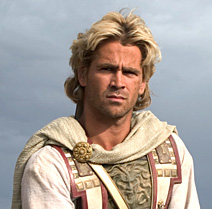
Alexander (2004)

Alexander  is Oliver Stone’s bete noir. He’s had several cracks at re-editing, with the inevitable ‘final cut’ being his definitive view of the Greek conqueror. Whichever version you see, it’s a clumsy, boring mess. Compromised by the emotional distance from its subject and made suspect by its historical crazy paving, Ptolemy’s narration only serves as a further irritant to the already nettled film-goer. The hopelessly miscast Colin Farrell’s Venice Beach Alexander, too, seems utterly lost in this confused and confusing debacle. A shocker.

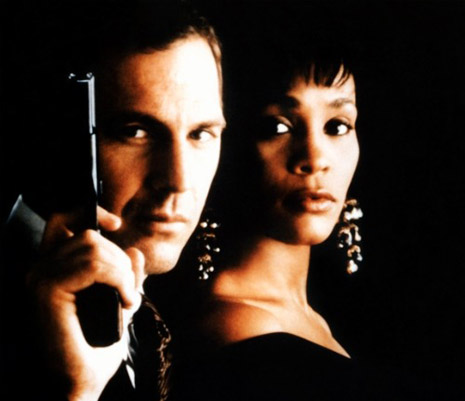
The Bodyguard (1992)
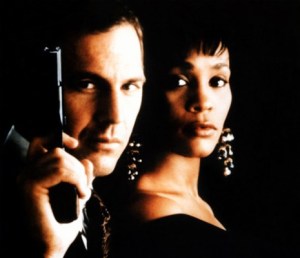
Let’s get to it. The leads, Kevin Costner and Whitney Houston, deliver some of the worst acting in the history of cinema. Whether or not that’s director Mick Jackson’s fault, or whether Lawrence Kasdan’s clunker of a script induced narcolepsy in the cast – or whether Costner and Houston were too bound up in themselves, it doesn’t really matter. Nothing, I mean nothing, comes off the screen. Not a spark. It is like watching Pac-Man try to mate with the cursor. And, oh yeah, Kevin sports yet another bad haircut.

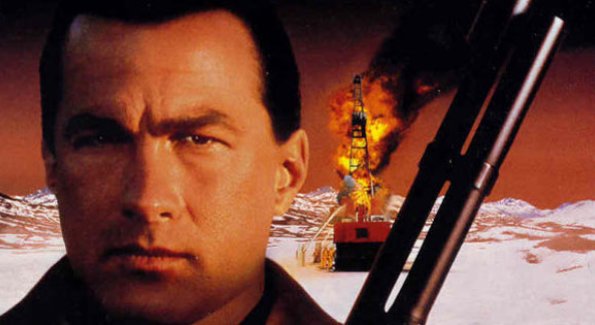
On Deadly Ground (1994)

Co-produced, directed by and starring the king of smirking gits, Steven Seagal, this vanity piece is a slimy, oafish affront to the sensibilities.( One of my most cherished cinema memories involves Seagal. At the Embassy, a few years back with Josh, we were watching ‘Executive Decision’. Seagal plays a Special Forces type who’s trying to get aboard a hijacked plane via a ‘sky tunnel’ from another aircraft. It all goes wrong, the tunnel disintegrates –  Segal along with it. Most of the audience applauded vigorously when this happened. Happy times)

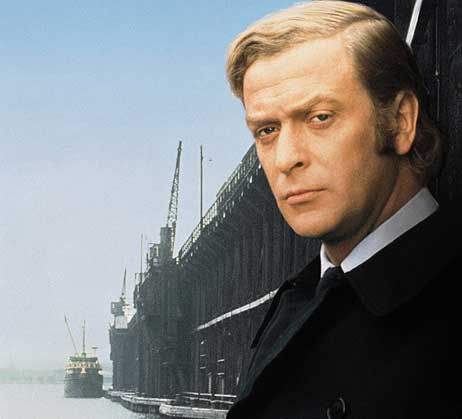
The action takes place in Alaska where Seagal uncovers an oil pollution cover-up by eco-rapist, Michael Caine. Caine’s make-up lends him the appearance of an elderly Chinese theatrical as Seagal grunts his monosyllabic way through numerous killings and explosions to the film’s hysterical conclusion. Then follows an epilogue, where Seagal addresses the Alaska legislature on the evils of pollution and resource exploitation. I’m not sure if ‘breathtaking mediocrity’ is an oxymoron – but it’ll do me.

Match Point (2005)

As nasty a movie as I can remember seeing, Woody Allen’s London-based take on ‘A Place in the Sun’ is a continuation of the misogynistic themes explored, more successfully, in ‘Crimes and Misdemeanours’.

Allen likes to have his leading ladies betrayed and/or killed and I often wonder if he’s not acting out his own fantasies up there on the screen – a sort of New York Jewish Hitchcock. To compound this unpleasantness, Allen treats London and the British class system like a hesitant tourist presented with his first taste of Guinness and oysters. His characters are designed to expedite the plot without any consideration of actual social mores. There is no organic transparency only veiled artifice.(Robert Altman has a much defter touch around similar themes in ‘Gosford Park’, for instance) All in all, a mean, pucker-faced vagrant of a movie. Throw it a dollar and be on your way.

Separation City (2009)

Back in Shakespeare’s day, this would have been pelted with rotten fruit and vegetables. I did actually boo and hiss at it from my comfortable seat at Island Bay’s Empire Cinema. I remember reading somewhere that Tom Scott’s naff script had been sitting in a drawer somewhere for 20 years before being dusted off and put forward for funding. What a pity it didn’t stay there.

The story concerns a couple of failed relationships and the harm that’s done when people stay together out of custom. Unfortunately, the back stories lack credibility so what’s going on up on screen doesn’t register. The characters, especially the females, are ghastly stereotypes and offensive. The jokes are of the behind-the-hand ‘tee hee’ variety and made me squirm – and I hate to be made to feel uncomfortable in that way. In fairness, Danielle Cormack emerges with honour, investing her character with more credibility than the writing deserves. Somehow emblematic of the whole fiasco is the obvious use of Wellington Town Hall as a double for a Berlin Convention Centre. Careless and smug in a way that only someone who has been drawing the same cartoon for the Dominion Post for the last 30 years could manage. Garbage.

Wise Blood is delighted to introduce guest blogger, Docco, who will add an eleventh turkey to the list.

The Happening (2008)
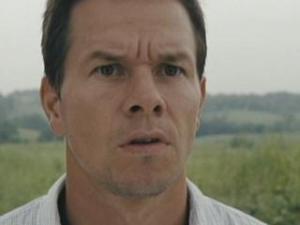
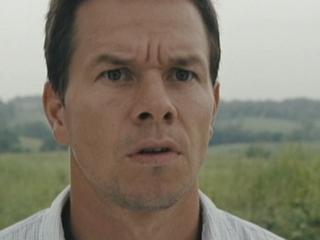
This movie should have been re-named ‘Not Much Happening’. Directed by M Night Shyamalan, whose career started off so brightly with the great ‘Sixth Sense‘ and the not quite so good ‘Unbreakable’, the premise of this film is about a strange ‘happening’ which spreads across the world, making people kill each other for no apparent reason. Not a bad premise when you bear in mind that the film must be heading towards one of Shyamalan’s trademark big twists. However, the problem lies with lead actor, Mark Wahlberg. In one of the worst displays from a leading man, Wahlberg’s wooden, one-dimensional performance hampers the stuttering storyline from gathering any momentum. The piece de resistance from Wahlberg comes when the camera swoops into a close-up and he raises his eyebrows with as much sincerity as an extra on ‘Days of our Lives’ and utters the words; ‘It’s happening’.

Wahlberg’s performance stunk up this film so bad I cannot even remember the twist. The Village’ and ‘Signs also rank up there with Shyamalan’s trilogy of shame. He made a slight come-back with ‘Devil‘ – finally realising some of that potential he displayed in the 1999 sleeper hit, ‘The Sixth Sense’.

Ten Turkeys – Part 1

I love the movies so much that I’ve only ever walked out during a screening on two occasions.

The first time was when I was about 13 or 14 and went to see ‘Harold Lloyd’s World of Comedy’. There’s a scene where he’s mistakenly sniffed some ether on the roof of a tall building and then starts clambering around on the parapet. It was more than I could stand (I don’t have a great head for heights) so I walked out.

The second time was at a Wellington Film Society screening of Nagisa Oshima’s ‘The Diary of a Shinjuku Thief’. I was with Pat and a couple of friends and we were stuck in the middle of a row. But this movie was slowly sucking the life out of me, so I got up, shrugged an apology and walked out. Know what? A couple of minutes later I was joined by 20 to 30 other discriminating Wellingtonians who knew the cinematic Sin of Onan when they saw it.

All of which means that in my time I have endured some damned excruciating codswallop in pursuit of the nine muses across the silver screen. And so, another list beckons. But these just aren’t bad movies. Oh no. These are movies from  privileged homes. Movies with big budgets, big stars and big PR. These are very bad movies that told us they were very good. They led us astray with their promise of a good time only to deliver flatulence and flaccidity. Beware the Ten Turkeys!

The Matrix Reloaded (2003)

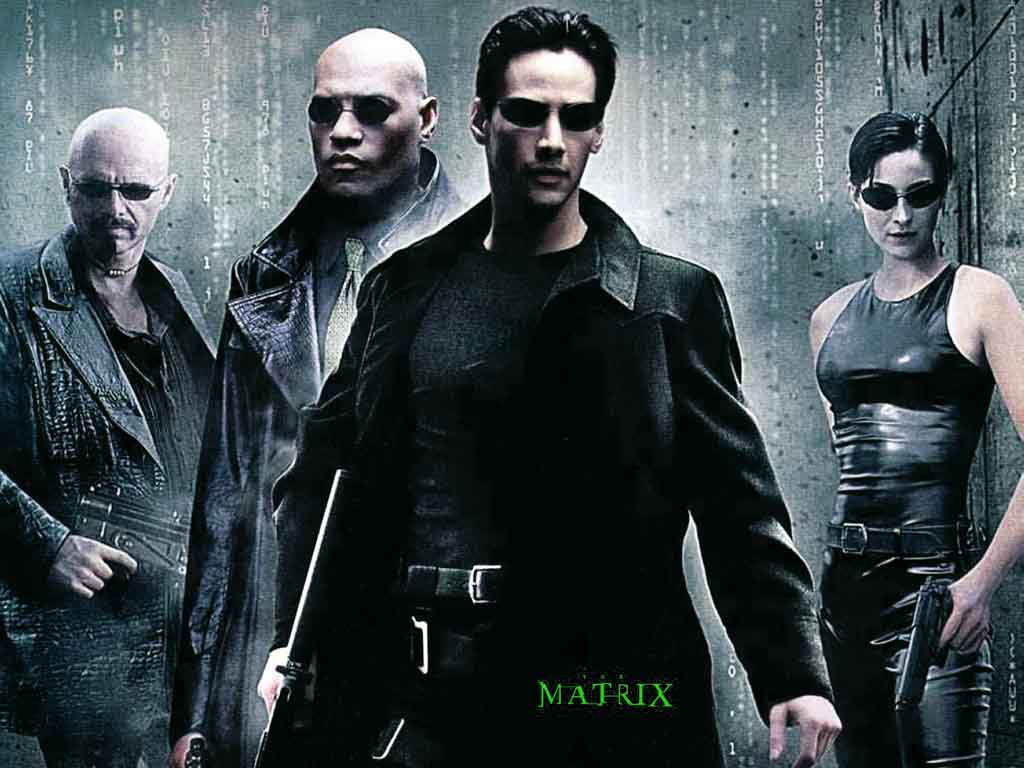
At 138 minutes, this is the longest Coca Cola ad ever made. The Matrix was interesting but borderline pretentious twaddle. This sequel takes it twitching and jerking over the edge. The impenetrable plot, meaning-laden allegories, ludicrous sex scenes and interminable Smith clones would be enough to have you reaching for the party pills – but casting a wooden Indian in the lead, ensures that the faux gravitas –  so necessary to stay onside in the suspending disbelief game – will never be delivered. DVDs should carry a Government Health Warning.

The Da Vinci Code (2006)

Based on Dan Brown’s best-seller of the same name, the cinema-goer is given an early warning by the presence of the dire Ron Howard as director. The series of implausible episodes that simulates a plot has got something to do with a search for The Holy Grail (Yes – already essayed by the Pythons – but nowhere near as funny as this) and a covert bunch of clerics called Opus Dei who believe the Grail’s discovery will bring about the end of Christianity. Well, I have news for Opus Dei; Rupert Murdoch and Simon Cowell have already rendered that concern redundant.

Poor Tom Hanks does his best but the dreary direction, plodding plot and largely phoned-in performances combine to ensure a soporific outcome. (The makers even refuse steadfastly to make any use of the Paris locations) There is a sequel, Angels & Demons (2009) which I’m told is equally insulting. Avoid at all costs.

The Postman (1997)

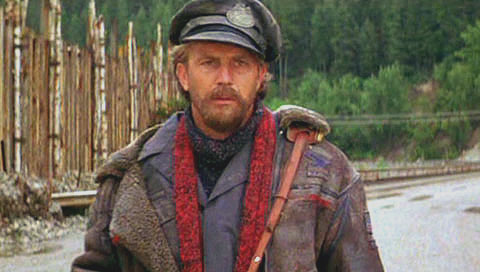
In which Kevin Costner covers up his bad haircut with a bad hat and wanders around post-apocalyptic Oregon, quoting Shakespeare, delivering mail and killing people. Evidently, Costner hadn’t learned his lesson with Waterworld (1995) and was determined to go from simple disaster to utter debacle. Flee for your life.

Harry Brown (2009)

I have already written about this despicable piece of right-wing agitprop under the title Dirty Harry. And the link will take you there if you’d like to read a more detailed critique. Suffice to say, I disliked this film enough to feel justified in including it here. Its ideological ancestor is Death Wish (1974), Michael Winner’s celebration of vigilante ‘justice’ – which is equally vile.

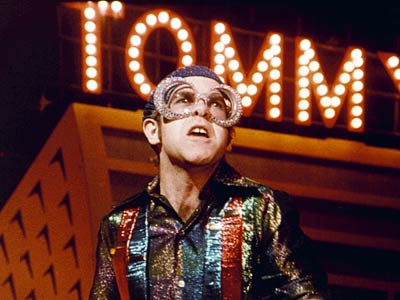
Tommy (1975)

Ken Russell’s adaptation of The Who’s Rock Opera. It has its admirers and a few infamous scenes – but for me, whatever it may have going for it, the movie runs out of gas and ideas after about 20 minutes. All that’s left then is a garish, wholly excessive testament to Russell’s somewhat confined view of humanity. If you like the music, buy the record, is my advice. I’ve had three attempts to get to grips with this whirligig of a movie. And the pants have been bored clean off me each time. If you’re infinitely patient or your discernment has been brutalised beyond repair, then this may be for you.

A Note From The Author; That’s enough for now, I think.  If I include the other 5 now, I may lose all strength and resolve. So, Part II will appear shortly.