Author Archives: wbalanstuart

Killers of the Flower Moon – Movie Review

It may not be wise to try and critique this imposing monolith of a movie that Martin Scorsese has unearthed as he enters his ninth decade amongst us. He is, after all, one of America’s pre-eminent men of letters – even though I believe the second half of his career does not, and probably never could, match the first half. I was saddened by ‘The Irishman’ (2019) which I felt was wrong in so many ways and consequently left my safe house for the cinema in a rather apprehensive state of mind.

So. Is it any good? Well, yes it is. But there are flaws and I think they’re important flaws – mostly because I readily concede that some will see these same aspects of the movie as strengths and not weaknesses. Hence my hesitation at the outset of this review.

The narrative is concerned with the evil that men do; In particular, white men. Evil requires victims and in this story, taken from history, it is indigenous Americans from the Osage tribe who are swindled and murdered in order to obtain their oil-based wealth. The stage for this numbing tragedy is Oklahoma shortly after the conclusion of World War 1.
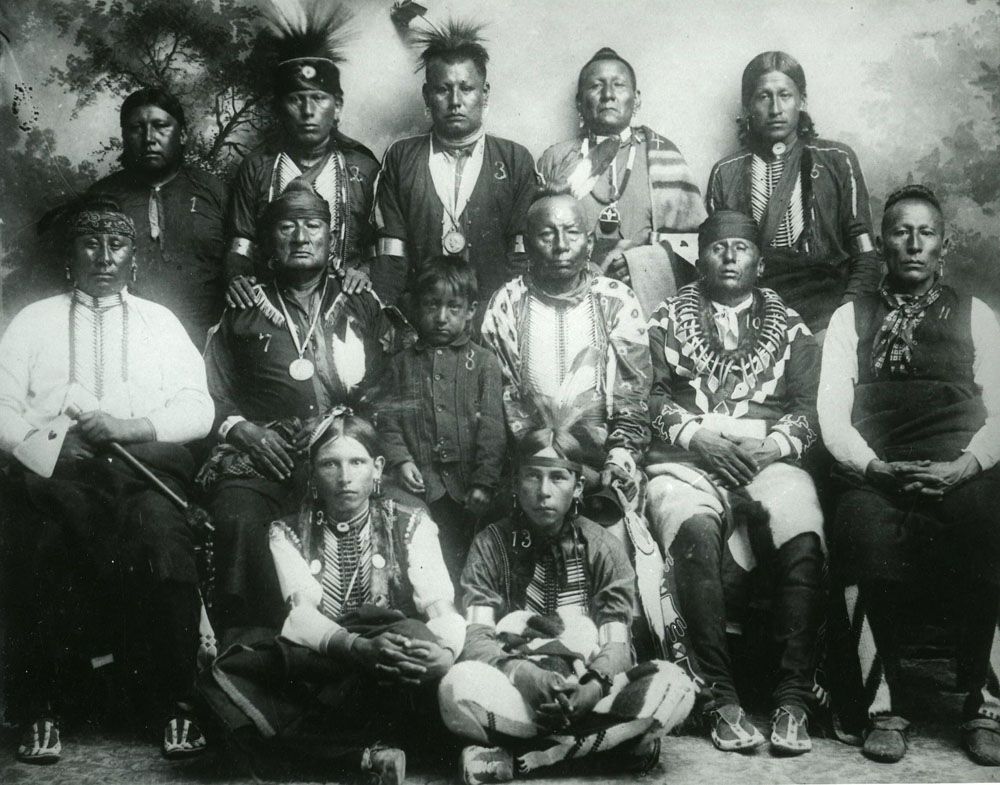
As the story unfolds, the movie at times feels more like Francis Ford Coppola than Martin Scorsese. This isn’t just gangsters killing other gangsters. This is gangsters killing indigenous Americans and anyone helping them. This is about a culture being sacrificed to satisfy greed. It’s about racism and banking, the Ku Klux Klan and capitalism. It’s the director’s take on a particular piece of Americana – institutional prejudice – and despite the wondrous cinematography, it is often a hard watch. Which leads me to Robert De Niro. He portrays crime boss, William King Hale, who orchestrates the conspiracy to rob and murder the Osage men and women who stand between him and immense wealth. The movie runs for about three and a half hours and De Niro is on screen for much of that time. I see it as problematic that Hale has no back story. He just is. And he’s written, directed and played in a monotone of pervasive evil. Manipulation and treachery are his only characteristics. Existential hell is his proving ground. And at 206 minutes, that can be quite telling on an ancient posterior perched on a tired cinema seat. I feel, also, with that amount of time on his hands, Scorsese should have drawn more detailed pictures of his principal Osage characters. The skimpiness of these sketches seems to me to be at odds with the presumed purpose of the project.
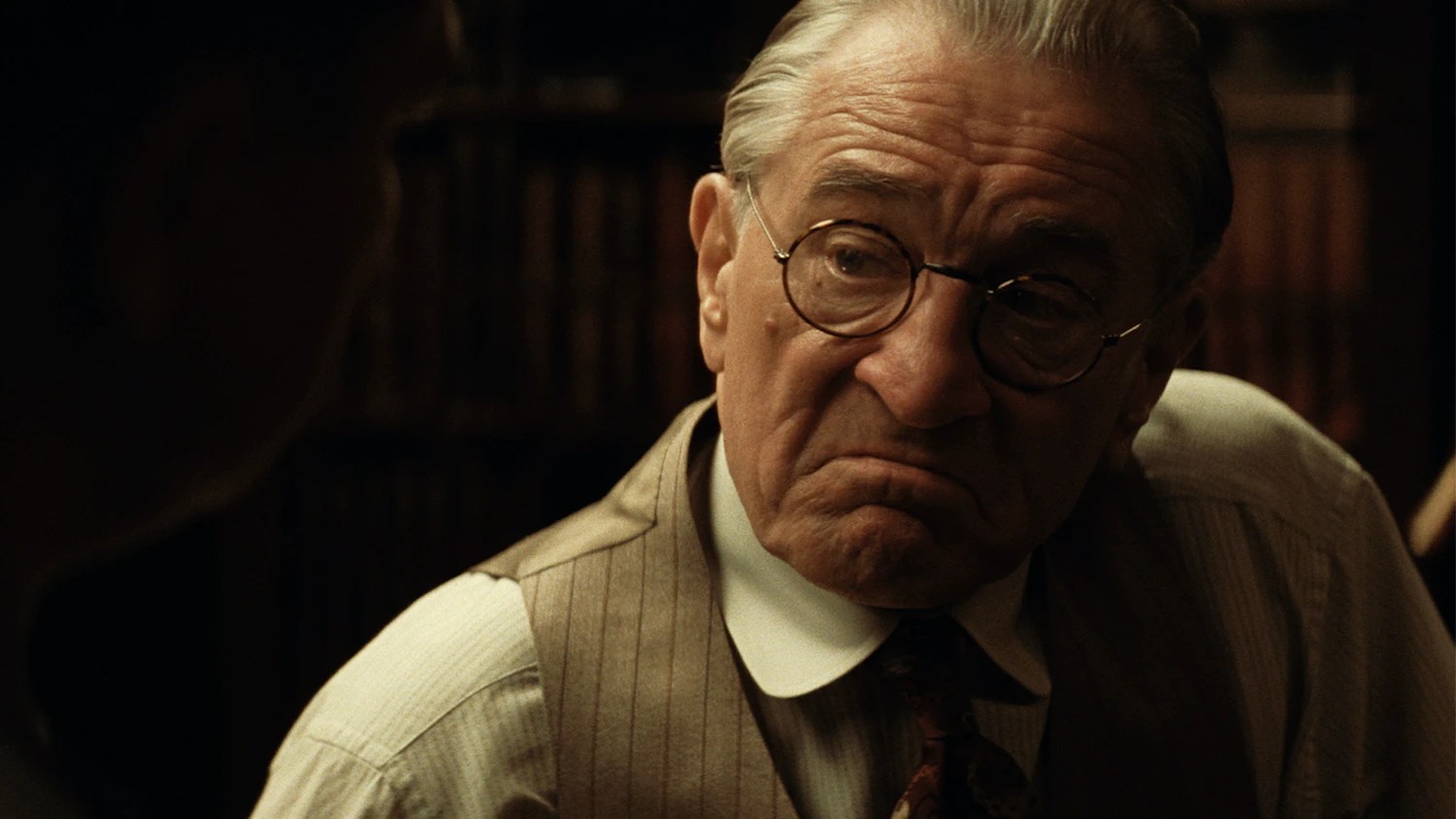
These concerns aside, Leonardo DiCaprio and Lily Gladstone contribute believable, nuanced performances that command attention throughout. Their presence has much to do with maintaining a credible balance to the narrative. In this, they are aided and abetted by Robbie Robertson’s persuasive original score of sighs and whispers from the Devil’s Music.

‘Killers of the Flower Moon’ is an epic tale of corruption and failure of a nation at the crossroads. It’s writer and director, Martin Scorsese, still has things he needs to say about his country and his art. I have some uncertainties about the means he has employed to achieve that end. But since seeing the movie a few days ago, it has continued to resonate and insinuate in my consciousness. I might just have to see it again to put those concerns to rest.


Team For The Times

I fell in love with The Busby Babes – the Manchester United team of the mid-50s – when I was around 10 years old and living in South London. It’s been an on/off love affair ever since then and characterised by all of the triumphs and heartbreaks a great passion can bring.
Like all dedicated fans, I’ve argued the pros and cons of each generation of Red Devils on the terraces, in the bars and in the living rooms with anyone who would listen. But I had never taken the time to work out what my best eleven players was from all those wonderful teams I’d watched over nearly 70 years. As you might guess, the recent passing of Sir Bobby Charlton brought back many fond memories. He, more than any other player, embodied the spirit of a club that espoused thrilling, adventurous, skilful football. And it is that grand notion that will inform my selections for this team. I’ll set the team up in a 4-4-2 formation, pick a Captain, a handful of substitutes to warm the bench (Having subs makes it a little easier to name a starting eleven) and a Manager.

Goalkeeper: Peter Schmeichel

Defenders: Denis Irwin, Jaap Stam, Rio Ferdinand, Patrice Evra

Midfield: George Best, Roy Keane (C), Duncan Edwards, Bobby Charlton

Forwards: Cristiano Ronaldo, Denis Law

Substitutes:  Alex Stepney (GK), Gary Neville (D), Eric Cantona (M), Ryan Giggs (M), Wayne Rooney (F)

Manager: Alex Ferguson

Just a few words of explanation; This selection is broadly representative of the 3 great teams of the 50s, the mid-60s and the late 90s/early noughties. Duncan Edwards was probably the outstanding player of his generation but lost his life as a result of the 1958 Munich air crash. Bobby Charlton provides the link between the 50s and the 60s.

George Best had to be there. Quite simply, he was the greatest player I ever saw kick a football. If Best is in, then undoubtedly Denis Law must be there also. Those two were the crucible that fired the phenomenon of United in the 60s and the extraordinary following that the club attracted. And Sir Alex is Manager not only for his record of success but also because I believe he would have been able to manage George Best so that he may have realised his full potential. I can dream, can’t I?

Roy Keane is the only Captain I want. The phrase, ‘he has your back’ was invented for him. Roy was tireless, fearless and endlessly demanding of improvement in himself and those around him. And, believe me, you’d much rather play with him than against him.

Clearly, there are some notable omissions and David Beckham is foremost of these. But George has the number 7 shirt and honestly, I’d rather have Cantona and Giggsy on the bench. So there it is. If by some stroke of metaphysical luck this team could ever take the field, I’d pay an awful lot of money to see them.

‘Crimes and Misdemeanors’ – Looking back at Woody Allen’s existential drama


I first saw this movie at Charley Grey’s, Devonport in 1990. It was memorable for several reasons – but mostly because my sister-in-law, Mary, was nearly carried off by an apoplexy upon hearing Woody Allen complain, ‘The last time I was inside a woman was when I visited the Statue of Liberty.’  That was Woody, the writer/director/actor, letting the handbrake go on this rollercoaster ride from comedy to melodrama. And he further summons up James Joyce and Adolf Hitler to decorate this almost Brechtian process of engagement and disengagement with his audience; Drama defaulting to comedy.

And it works fine. Watching the movie again last night, I was impressed by the details of its characters’ lives; Drawn in by the nuances of their faults, their venality, their humanity. At the heart of the story is an unforgettable performance from Martin Landau. His Judah, wealthy and successful, needs an impediment to his life removed but is fearful of an all-seeing God. What to do?

This is where Allen’s meticulous approach to his narrative pays off. He goes into that dark place that so many story tellers fear to go; The conscience. And he asks, ‘What would you do?’  ‘Is this okay?’ ‘How do you feel about doing this?’ But the movie is not ambiguous. It plays on the certainty of our ambiguity and the art of Landau’s ability to portray the realisation of The American Dream filtered through a glass darkly.
The movie has its problems. Alan Alda’s bumptious womaniser seems to be not much more than Hawkeye Pearce grown older. But to some extent this is mitigated by Allen’s script allowing Mia Farrow to invest some warmth and gravitas in Alda’s film producer with whom she is involved. Allen’s own performance, too, sometimes appears to lampoon his stock, angst-ridden neurotic. But I readily concede that this may be deliberate and serving as grist to the point/counterpoint mill.
I haven’t seen everything that Woody Allen has done but this film is certainly the best of what I have seen. It is rich, complex and troubling. It is a massively satisfying watch.

Bloom in the Time of Covid

Letting my country die for me is the escape I seek
As I find myself running from myself
To one who says love loves to love love
Says yes when I ask again says yes again
As I walk through myself
Encountering ferrymen journeymen fairground barkers
uncertain apprentices shimmering spectres orphans
widowers Gargantua running from David
Me running from me
To find the long way around to the short way home
Back to myself
On Saturday
Having buried Friday who buried Crusoe
Whose darkness could not comprehend the light
The latest in an infinite procession toward the ether
Pursued by the reproachful gaze of the cow
Consumed at noon to fend off a narrow end
Mindful that achievement heralds the death of intellect
A walk through myself feeds imagination averts success
Applauding my country as it mounts the scaffold
Saying it is a far better thing than it has ever done

Papa’s Two Toes

There’s irony involved in my recounting in Wise Blood the amputation of a pair of my pedal digits. It was a bloody business; But, in truth, not a lot of wisdom in evidence. Neglect, misjudgement, ignorance, bad luck perhaps. Not much wisdom though.

Wellington Hospital behaves like a City State. Once admitted acutely as a patient I became a subject of its authoritarian regime. A benevolent dictatorship where if you know what’s good for you, you’ll allow people you don’t know to do things to you they say are good for you. The vascular ward is straight out of Sartre. Everything I experienced within its dread portals posed an existential threat. From being denied food and liquid for nearly 24 hours ahead of a proposed operation that never happened to being in a cubicle next to some poor sod in extremis and then to a group of surgeons doing their morning rounds and discussing volubly each patient’s symptoms, diagnosis and prognosis. Patients’ rights are something typed on a piece of A3 and taped to a wall.

The food is awful. Dire. The piece of Cod that passeth all understanding. In my case what was on offer was also at odds with my dietary regime. Sugar and potassium are unhelpful and it’s not too much of a stretch to expect that would have been known. But when I asked if a diabetic choice were available, I was proudly told that all meals were designed to meet those needs. Mmm. Some Orwell with your jelly and ice cream?

And so – into theatre. A good name for it. A cast of anonymous, masked actors who perform an arcane ritual on the body of a volunteer who has been hypnotised. To brighten up things, the cast compete to see who can wear the most colourful and eccentric headgear.

I’ve had Sartre and Orwell and now Dali made an appearance; The surgery complete, I’m asked what I would like done with the two amputated toes. ‘I want to see them and farewell them’, I replied. And so, with due solemnity and gravitas, my poor, orphaned digits were presented to me in a small, open container. I reached in and cradled them gently in the palm of my hand. There was a respectful silence in the theatre. I waited a few moments and then said, ‘You know, that’s the first time I’ve been able to touch my toes for almost twenty years.’

Film Review – ‘Promising Young Woman’

‘Promising Young Woman’ (Emerald Fennell 2020) is a piece of work. The narrative charges into the china shop of Me Too, betrayal, identity crisis, obsession and revenge., leaving us to ponder if we really want, or need, to pick up the pieces. The visual style is redolent of Lynch, Verhoeven and Hitchcock – the framing lingers on its subjects, the colours are vivid, the domestic interiors belong to lives that are ordered, predictable yet somehow otherworldly. The contrast between comfortable certainty and uninvited darkness is Fennell’s playground. The first time director has a well chosen cast who manage their lines like thy were precious cargo. Carey Mulligan, most likely in the role of her career, delivers a character that fuses Joyce with Euripides. Loyalty beyond death conveyed without artifice but with a knowledge and passion that is astonishing. A must see.

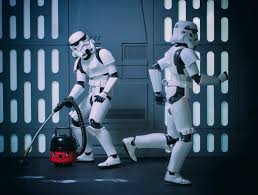
Do Vacuum Cleaners Dream of Fascist Conquest?

We have two brush and pan sets
And one of those manual carpet cleaners that you push and pull
That need to be painstakingly cleaned by hand every so often

But we’re content with our lot – our sovereignty – our right to self-determination
When it comes to cleaning the chippies and dog fur off the carpet
We eschew the automised marvels of the warfare on domestic bacteria

Our Ruritanian idyll has been undisturbed for generations
Analogue recordings of unvarnished music-making
Exist happily alongside stethoscopes, Agee jars and sewing kits

But now the tranquillity and homeliness are threatened
By the sirens wailing their ode to Cassandra
‘Beware! The machines have risen. Save yourselves. Plug your ears!’

Massed on our borders is a horde of clamorous appliances
With foreign names like iRobot, SEBO and Eureka
And led by the traitor, Dyson

Once these Behemoths and Leviathans enter your domain
All will be lost
And your independence will be suborned to the appetite of the motor

Conversation, reading, music-making, eating – even coitus – must cease
No demurral will be brooked – no obfuscation heeded
No meal will be cooked when cleaning is needed

And when the machine approaches, move your legs
So as not to impede its progress
Avert your eyes and be respectful

For when you seethe, heave and weave plots of rebellion
Then recall the legend inscribed on Woody Guthrie’s vacuum cleaner;
‘This Machine Kills Democracy’

vacuum


Under Guarantee

Anticipating a satisfying and humorous outcome to the story
I laughed and applauded before the punchline came
The speaker, though, was gratified by my congratulatory slap on the shoulder
And taking comfort, moved on to a further anecdote of Jovian form and style

Alarmed by reports of vicious attacks on the elderly, the halt and the lame
In my neighbourhood
I resolved to ensure the safety of me and mine and purchased protection
And now the only travail is stepping over the silent bodies of would-be assailants

Remembering that there was a time when I was clean and sober
Allows me the comfortable alchemy of transforming past to present
And pay homage to the metaphysical poets
With my imaginings of self-improvement and sui generis

Which brings me to Dr Jekyll – who sought self-improvement
But failed to study the small print of the warranty issued by his creator
Robert Louis Stevenson
Who warned that ‘to travel hopefully is a better thing than to arrive’.

jekyll


Chindit

chindit

Joyce Thompson sat opposite me, screwing up her face
As she made entries, longhand, in a register
She looked as if she had escaped from a photograph of dazed Londoners hiding in a tube Station lest the Luftwaffe crashed their party
Anslow Wilson of EC3 employed us to impersonate employees
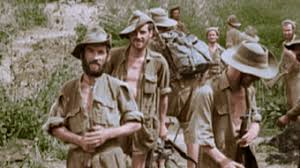
In return for money and access to a private box at the Albert Hall where we could see Demis Roussos for just one pound –  but Joyce never went there. She had to rush home at 5 to take care of her husband who was permanently invalided because he fought the Imperial Japanese Army in the Burmese jungle and had received the Distinguished Service Cross and Amoebic Dysentery for his troubles
He led a quiet life. Didn’t eat much – drank a lot – watched telly. Mostly horizontal. Hardly Ever vertical. Except for visits from the doctor. But Joyce loved him as best she could in Her Peckham Rye way. She told me that her husband knew Orde Wingate who had Dreamed up the Chindits – an Army deep penetration unit, she said. I resisted the urge to Ask what it was they were penetrating. He was dying slowly and that was enough.  You Survive a war but you don’t really, do you? No one does.

Splat


Some American Presidents

wahington
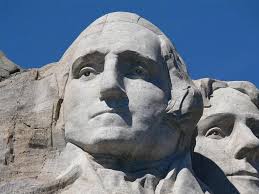
George Washington (1789 – 1797)
Washington was the first President of the United States and is said never to have lied through his wooden teeth. Which places him at variance with the majority of his successors, none of whom had wooden teeth but lied with great energy and imagination. As Washington was born prior to the adoption of the Gregorian calendar, I cannot vouch for the accuracy of the dates supplied above. For all I know, he may even still be alive and serving as an aide to the current incumbent.

jefferson

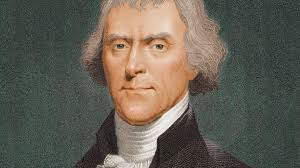
Thomas Jefferson (1801 – 1809)
Jefferson was the third President and one of the most important political figures in furthering the cause of popular music. Appointing George Clinton (b 1941) as Vice President undoubtedly gave rise to a surge in the popularity of Funk music. And the irony of his band name, Parliament Funkadelic Collective, was not lost on anyone, let me tell you.
If you are concerned that Clinton’s birth date is anachronistic, blame it on the bloody Gregorian calendar.

jackson

Andrew Jackson (1829 – 1837)
The 7th President, Jackson is the one to blame for the formation of The Democratic Party. He’s also the first and only President to pay off the national debt. He did this by selling off hundreds of his slaves as well as his entire collection of George Clinton albums.
Jackson’s legacy is celebrated in Lonnie Donegan’s ‘The Battle of New Orleans’. Donegan, an itinerant musician, was Jackson’s Vice President from 1960 to 1964. (You know it. Gregorian lassitude once more)

taylor

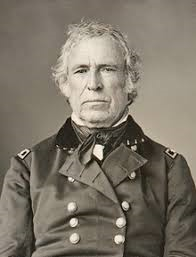
Zachary Taylor (1849 – 1850)
The 12th President was the son of plantation and slave owners. He joined the military and was soon killing hundreds of Mexicans and Native Americans. All of which made him the perfect candidate for the Presidency. However, with only a year under his belt, Congress urged action on slavery – and this caused Taylor so much consternation that he went on a nervous eating binge, so much so, that his stomach exploded in a fashionable restaurant. (It is now generally accepted that this incident was the inspiration for the Monty Python Mr Creosote sketch.)

abe

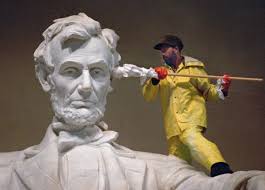
Abraham Lincoln (1861-1865)
The 16th US President, although a brilliant automotive engineer and the inventor of the Model T Lincoln, was extremely forgetful. Thought to be partly caused by hearing difficulties, (see picture) his transient amnesia resulted in him often not being able to remember where he lived. Consequently, his parents arranged for their Gettysburg address to be tattooed on his left forearm.
Lincoln’s success in the automotive industry led to a bitter rivalry with his main competitor, Henry Ford. On Good Friday, 1865, Ford invited Lincoln to his own theatre (Ford’s Theatre) where he was held down and the tattoo surgically removed. The dazed and confused Lincoln stumbled out into the Washington night, unable to remember where he lived, and was never heard from again.