Done to Death

Bullets, bayonets and fixed charges
Billets, skillets, troops in barges
RSM, clenched teeth are hissing
God knows the number that are still missing

Mules and wagons, mud unyielding
Who won the toss and are we fielding?
The mortar shells are getting nearer
The entry price is getting dearer

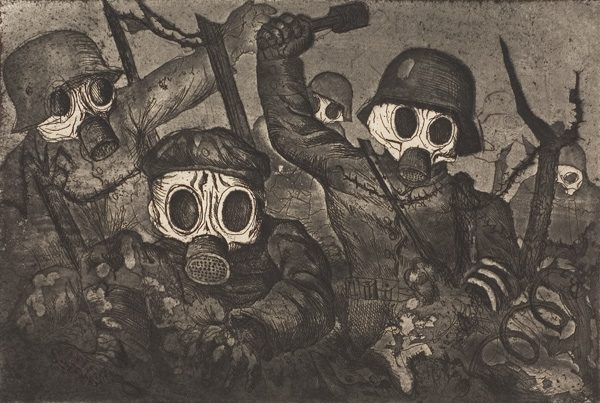
Put your masks on! Here’s the gas!
Keen as mustard, attack en masse
Have to re-take that position
Eyes shut, running, on a mission

Zip! Shoom! Kerrmp! And then a scream
Not a nightmare, nor a dream
But treading water – last few yards

Firing, thrusting at the guards

Kamerad! Their arms held high
A bunch of kids, about to die
To die for what? The Captain said
So Englishmen may rest well in bed

No greater love is there than this
To give your life for Empire’s wish
And at the setting of the sun
Believe it’s ended – yet just begun

war301

Song for Aggrieved Gospel Choir

Justify
All you ever do is justify
You never ever want to tell me why
Like the margin on this song
You only justify

Justify
All you ever do is hint and lie
I never ever see you pause or sigh
Like a jury never wrong
You only justify

You really oughta
Wade in the water
Baptise
Don’t chastise
Your sons and daughters
Cos you only ever

Justify
Sweet disposition coming by and by
A plated head beneath the glowering sky
And like Salome’s John
You only justify

You really oughta
Wade in the water
Baptise
Don’t chastise
Cos you only ever

Justify
You only ever
Justify
Justify
Justify

La Ville Mourant

The broken ground holds echoes of vanquished conceits
As the freckled spume bobs idly in the mouth of the bay.
And all around the hills, mortgaged eyes stare unblinkingly
At the sharp edges and impertinent reflections of the city

The children under bridges
Little boxes on the ridges
The tellys and the fridges
Are slipping away. Losing their grip on the city

In a room, far away, unconcerned by value, stands the fiscal Priapus
Honouring his father, great mercantile Dionysus.
He points south and with a gesture, flaccid and untailored
Betrays the denizens, the citizens, the begin-agains of the city

The brokers in their stripes
The journos with their hypes
The lobbyists and their gripes
Are slipping away. Losing their grip on the city

But other, more ancient Gods know that the land endures
Gala will not become Grendel.
Rangi and Papa conspire and light will join with earth
So that narrow men will cast no shadow in the city

A note from the author

The vandals may have occupied our city
But they are the 1%
The citizens are the 99%
And we will prevail

Billy Liar and The Glittering Zombies (A pome, I think)

Can I ask you something?
Go on then
When you dream that you’re making love to someone else, do you tell your missus about it?
She’s not a citizen of Ambrosia. Why would I?

I read the News today, oh boy
About a lucky man who made the grade
Did you read the News?
Heed the News?
Did the English army win the war?
Or was it the young Americans?
And did they send in the Navy Zeals?
Send them onto the Sands of Iwo Jima
Or was it The Sands, Las Vegas?
And did they gambol on Sunset Strip?
And were they, indeed, zealous?

They gravitate to supermarkets, zombies do.
That music you can hear
It’s chosen by them
Not by management
And they sway, in time, down the aisles
Selecting stuff that may be reached with their stiff, outstretched arms
Always in time
Zombies and African-Americans have natural rhythm
An African-American zombie has never been on Dancing With The Stars
Discrimination abounds

He wants to do stand-up
Stand up, stand up. Stand up for your rights
Don’t give up the fight
Billy is a fisher of words
One-liners; Ocean liners; Billy Ocean liners
Loverboy not Lover Man
That was another Billie
Lady Day at Ladies’ Day At the Races with Groucho
Marx

Now let me ask you something
Go on then
When you’re making love to your missus, are you dreaming of someone else?
As President of Ambrosia I would consider it undemocratic to behave otherwise

A note from the author;
Billy Liar is a 1959 novel by Keith Waterhouse. There was a successful film adaptation in 1963, directed by John Schlesinger and starring Tom Courtenay as William Fisher – ‘Billy Liar’.
The ‘Glittering Zombies’ are Billy’s arch-enemies; The smooth, well-dressed but unimaginative – employing class who he longs to leave behind.
As for the rest – you’ll have to figure it out for yourself. If you do – please drop me a line as I don’t have clue one.

Is Jackson Da Bomb?

Here’s the link to a piece from Casual Parking.
http://casualparking.blogspot.co.nz/2010/11/jackson-beaten-to-punch-on-dam-busters.html
wilson_parking

1972

It was an odd decision
Still reeling and spinning from a messy relationship break-up, the antabuse and the disappearance of Paul the supplier, I needed to find my way back into the world.
A friend, Alex, had seen the ad in the local paper.  The Casino in town wanted someone to manage their security and reception.
So here I am, waiting in reception.  Listening to ‘Nights in White Satin’ on the PA, waiting to be interviewed by Mr York-Danvers, the manager. As I’m sat there, two croupiers saunter by and glance my way. They look like an ad for ‘Twins of Horror’ –  the jet black Rod Stewart hair-dos, the deathly pale skin and the skeletal, articulated fingers that extend from their plum red velvet sleeves. Their immeasurably knowing smiles seem far too great a burden for their 9 stone frames.
But then there’s double-barrelled. He shakes my hand in an arcane, possibly masonic, way and we stride off to his inner sanctum.
Unbelievably, there’s a signed photograph of George Raft behind the imposing Edwardian desk. Double-barrelled tells me he likes to be addressed as ‘sir’ on all occasions. He asks if I can handle myself ‘in a tight corner’ and whether I’ve ever been detained at Her Majesty’s pleasure. I tell him the usual lies and then we discuss duties, salary, hours and clothes and – yes – I can start on the weekend.
An odd decision
Splat
A black velvet suit, a poorly ventilated, crowded gaming room and an unusually warm summer present  a particular challenge to personal freshness. I have a friendly chat on the subject with the two reception/security staff – ‘bouncers’ to you – doing the late shift. They enquire about which Ballet Academy I attended and voice opinions, to which they are not entitled, about my sexual orientation.
Before I can ponder on how best to deal with my first staff problem, a bunch of lads – drunk and noisy – arrive in reception and demand admittance. My colleagues smile and fold their arms. I place myself between the lads and the gaming room, look at them calmly and advise them that sobriety and a correctly completed membership form is all that stands between them  and a wonderful evening’s entertainment. I hold the tempered steel chain we use to secure the front door in my left hand as a means of underscoring my determination in this matter. Sensibly, maybe even luckily, they see that discretion is the better part of wotsit and leave muttering terrible oaths.
‘Bigger poofs than you’, suggests Terry the bouncer. He’ll keep.
Splat
Double-barrelled is asking me about my accommodation. Do I have a spare bedroom? My frown is picked up by his scanner and he laughs. ‘Nothing like that’, he declares, ‘a new man arriving soon – needs somewhere to stay.’ The new man is connected. The Casino owner, a former professional boxer, has a sister who is in a ‘relationship’ with this guy – also a former professional boxer. Funny old world. As it happens, I know about Ray McEvoy. The McEvoys are one of those East End dynastic families. Successive generations of prize-fighters and villains. Ray is a former ABA finalist and ranked middleweight. I know he was working in a West End Casino where my cousin, Michael, is a croupier. I wonder why he’s schlepping around the provinces. Anyway, yes, I have a spare bedroom at the flat and I’m intrigued enough to offer it up.
An odd decision.

Splat
Ray is charming, handsome and light on his feet. ‘And there’s no one home’, offers Rob, the other tenant. ‘Cold as, mate. Dead eyes, cold hands. Did you shake his hand? Like ice.’ We’d met Ray earlier. He’d brought a few possessions, changed and gone straight off to the early shift. Rob is jumpy and thinks that I’ve made an odd decision.
Over the next few weeks, Ray more than justifies Rob’s anxiety. Any difficult customers at the door are offered violence – or the threat of it – and visits from Old Bill are becoming regular. One punter who Ray has ‘given a bit of a slap’ comes back with some hoods from a local drinking club and the result is a brawl that ends with your correspondent rendered hors de combat, bowed and bloody.
And now cousin Michael is on the phone telling us that our new flat-mate is on the run, having used an iron bar on a customer at ‘The Golden Nugget’ in London. This complements nicely the incident from the previous week when a pissed-off punter, playing poker upstairs, pulls a gun on the two sharks who had scammed him for several thou and wanted to leave the school early without allowing him the opportunity to retrieve his losses. Breach of protocol = Bullet in the head.
Splat
So, Casino life was dangerous and sleazy but rarely dull. We had all sorts happen in my short tenure there; The crew from up north who worked the roulette table by having a blonde with a spectacular cleavage bend over the baize as the steel ball nestled in its numbered slot. As the entire congregation waited on her every quiver, her associates moved the chips to advantage. Benny Hill criminals.
The airline crews, plying the Southend – Rotterdam route, turning up at odd hours, round the back, delivering God-knows-what.
The DI from Southend who felt sure that I had failing eyesight and couldn’t possibly have witnessed a particular incident outside the Casino.
And finally, Russian Max, the Pit Boss pressing me to also turn a blind eye to some profit liberation. This, and the constant menace of the sociopathic Ray McEvoy, persuaded me to pack up my belongings, pay up the lease on the flat and – with the help of some friends and an old Combi – return to London at the dead of night.
A better decision than some I’d made recently and, most surprisingly, I’d stayed dry and clean in the midst of these fleshpots.
Splat

Author’s Note
In order to protect the guilty, I’ve changed the names of the players. As ever, I’ve used some licence around time frames and sequence of events. But all this, and more, happened in 1972. And, to confirm the more recent stereotype, it all happened in Essex.

Just One Last Joint

Waiting in the surgery
Waiting for the thuggery
The skullduggery
‘Screw tin eyes’, I thought he said
‘Screw tin knee’, I heard him say
And thought of Oz and Judy
But it was a laparoscopy
And the crew she ate
That were his concern
As I bade him; Come – examine one last joint with me.

Stood in the ‘chef’s kitchen’
Like a spare Dick at a Richard convention
Wondering about convection
‘It’s a Sunday kinda joint’, he said
‘Etta James on regulo 4’, I heard myself say
And thought of Etta playing Chess
But it was Agnus Dei
The Lamb of God
Lunch at the manse
As he bade me; Come – eat one last joint with me.

Setting up at The Korner Bar
Tartan noise – a sound check under way
Underpaid for the 3 hours we’re soon to give
‘Beer and a feed?’ I negotiate
‘Fuck off’, the Innkeeper keeps it in
But he hadn’t heard us cover Jimi
Rob is God’s instrument
And his Hell’s Angels are air playing
And buying our drinks
As they bade us; Come – play one last joint for us.

Looking up at the brilliant sky
Staring at Vincent’s starry, starry, no worries night
Thought is faster and brighter than any comet
‘Where’s it all going?’ she asks
‘Sotheby’s’, I suggest
And our laughter is a conspiracy
A gunpowder plot
Hatched on a stash
Stashed on our patch
As I bade her; Come – smoke one last joint with me.

Splat

5 Albums I’m Loving Right Now

I recently contributed an article to Simon Sweetman’s blog. Here is the link for it.

http://www.offthetracks.co.nz/five-albums-im-loving-right-now-alan-stuart/

I’d like to send seasonal greetings to  all readers of Wise Blood and thank you for the feedback and encouragement during 2012. I look forward to posting more articles in 2013. May your God be with you.

Photo_3

1953

In 1953 we lived in Tunstall Road, Brixton. A part of South London that had changed significantly with the arrival of hundreds of West Indian families. These immigrants came looking for jobs and a better way of life in the capital city of the country that had colonised their own countries many years before.

Photo_2

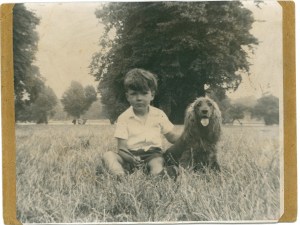
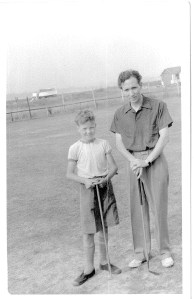
I was very close to my dad, Bill, and listened attentively when he discussed with Bess, my mum, the way things had changed in our neighbourhood. Mum had said she didn’t like the way that many of our white friends had left Brixton and been replaced by black families. She said she felt threatened by the blacks, especially the youths who gathered in groups on the street and spoke in a way that seemed hostile and foreign. Dad said that we had nothing to fear; that they were no different to us and most likely just as anxious as she was about their prospects in a new place with new neighbours. Most of all, dad wanted to remind us that less than 10 years ago, he had returned from a war that had been fought to ensure freedom from prejudice and ignorance. Pointing to me and my little sister, Lorraine, he said; ‘So they can grow up in a world where difference is the norm. Where difference is celebrated. Where the gap between black and white is the same distance, no matter which side you’re looking from.’  Although I was very young, about 8 years old, those words – that view of the world – were carved into the bark of my mind and have never been forgotten.

Photo_1

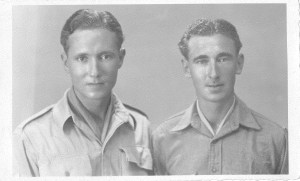
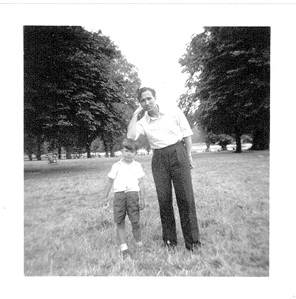
Before WW II, my father – that’s Bill on the left –  had been a member of the Communist Party and once the war started was faced with the choice of taking up arms to defeat fascism or to conscientiously object to the war. Many of his comrades had already gone that way and were subsequently arrested when demonstrating outside munitions factories, or suchlike. (He once told me that he thought these people to be the bravest he had ever known)
After being de-mobbed, dad – appalled by Stalin’s show trials and purges, left the CP and joined the Labour Party. Our upstairs flat in Tunstall Road quickly became a meeting place for party activists and intelligentsia alike. I can remember well that Tom Driberg was a frequent visitor. A prominent MP, the charismatic Driberg was openly homosexual, a singularly rare condition in the 40s and 50s, and could open many doors into the Labour leadership. No doubt, the Government’s immigration policy was a significant item on the agenda of those meetings.

At that time, the tension between white and black was palpable and this tension was intensified by right-wing activists through their publications and frequent meetings and rallys. Oswald Moseley had reactivated the Union Party after the war and although he had left the UK in 1951, his legacy was maintained by parties such as The League of Empire Loyalists. Dad loathed these people and their divisive policies –  with a passion and would attend their meetings with his friends – where they frequently had running battles with the ‘Blackshirts’ as he called them. These clashes caused my mother much anxiety as I recall.

On one particular summer evening, not long after Queen Elizabeth’s coronation, dad was late home again and mum was agitated and worried. I remember creeping out of my bedroom to sit on the stairs and I could hear Bess sobbing loudly in the living room.
Much later, I heard the front door open and close –  then the familiar creak of the stairs as my dad came home at last. At the top of the stairs he saw me and saw that I saw him – his face, fists and white shirt bloodied. From the living room door my mum gasps; ‘Oh Bill!’. 

Well, that night caused quite a rift between them and for a while the tension on the streets gave way to the tension in our upstairs flat. I can recall, as if it were yesterday, the relief I felt when on the roof, watching the fireworks on Guy Fawkes Night, Bill and Bess held hands and he nervously pecked her on the cheek. Two Londoners doing their best in difficult times.

Photo_5

The British Way of Crime

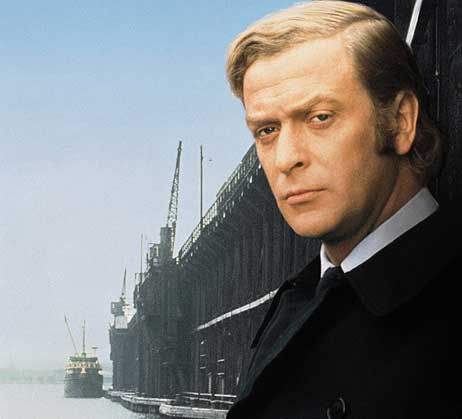
I thought it may be interesting to have a brief look at the history of British crime films and pick a few to discuss. In the last 15 or so years there’s been an emergence of the British Gangster Film, strictly, a sub-genre of the crime film. The way was paved by ‘Get Carter’ (1971) and ‘The Long Good Friday’ (1980) for a niche to be carved out by Guy Ritchie with ‘Lock, Stock and Two Smoking Barrels’ (1998) and ‘Snatch’ (2000). These were quickly followed by such brilliant additions to the genre as ‘Sexy Beast’ (2000) and ‘Layer Cake’ (2004)

But in London during my early teens, most crime films were of American origin and the replays on the television were mostly James Cagney, Humphrey Bogart and Edward G Robinson vehicles from the 40s. There were, though, the B-features that frequently played prior to the main feature at the local flea-pit. There were the ‘Edgar Wallace Mysteries’ and the ‘Scotland Yard’ series – which was introduced by Edgar Lustgarten. These were cheap, black and white films that lasted 30 or 40 minutes. But their style and characterisations had a major influence on more ambitious projects during the 60s.
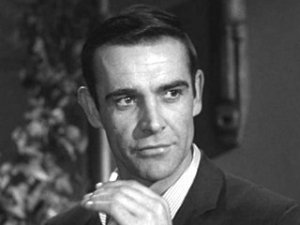
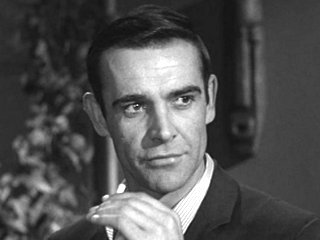
‘The Frightened City’ (1961) stars the young Sean Connery as an ambitious burglar who gets mixed up in extortion, protection and the turf wars of London’s West End. The black and white images are stark and reflect the corrupt and violent nature of the film’s criminal protagonists. It’s certainly not a great film but it does resonate with the influence of the emerging new wave, Melville’s ‘Bob Le Flambeur comes to mind, as well as providing an implicit commentary on the less wholesome aspects of emerging post-war prosperity. (Trivia hounds may be interested to learn that the theme music for this movie was successfully recorded by The Shadows, as was the theme music to the Edgar Wallace series – ‘Man of Mystery’)
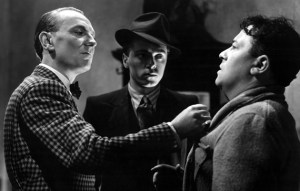
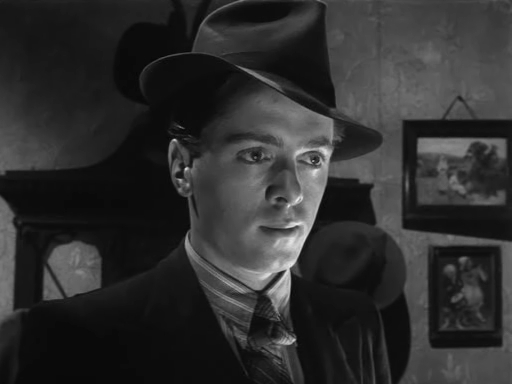
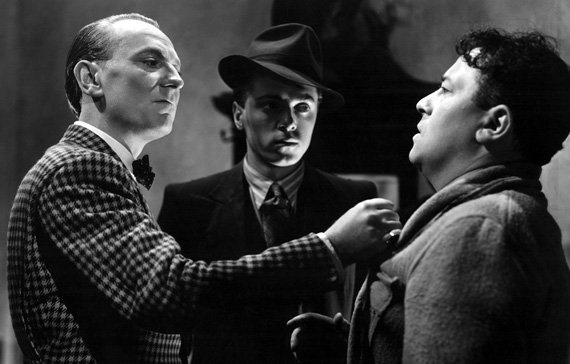
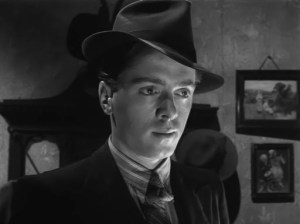
Some 14 years earlier in 1947, the most popular film in Britain was ‘Brighton Rock’. Based on Graham Greene’s novel and starring a youthful Richard Attenborough, the plot is centred around a criminal gang and their psychotic leader, Pinky (Attenborough). Although Greene’s familiar themes of good and evil, hypocrisy and the irony of redemption are present, the Boulting Brothers’ direction and Terrence Rattigan’s script peel back the layers of  between the wars Brighton, to observe the criminal underbelly beneath an effete facade. (The film was remade in 2010 by Rowan Joffe but with the action set during the Mods and Rockers battles of 1964.) And yes, that’s the very first Dr Who, William Hartnell, doing the threatening in the publicity still above.
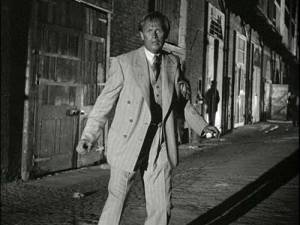
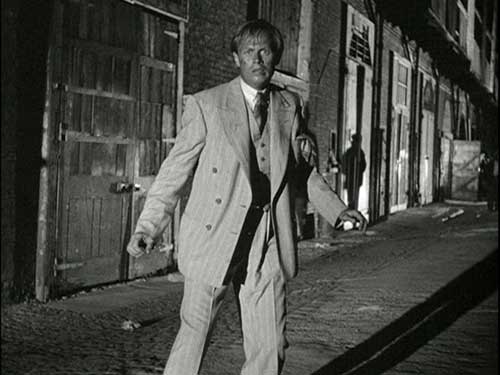
Although an American production, Jules Dassin’s film noir‘Night and the City’ (1950) was filmed on location in London and the city’s streets and characters entitle the film to a ‘British’ tag. This was Dassin’s first film in exile from Hollywood in the wake of the communist witch-hunts. The unremittingly bleak storyline, unsympathetic characters and savage finale are most likely a reflection of Dassin’s feelings at that time. Nevertheless, the film is now considered a masterpiece – and along with his ‘The Naked City’ (1948) and ‘Rififi’ (1955) entitles Dassin to be considered one of the greats.
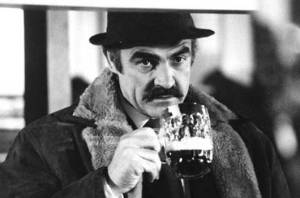
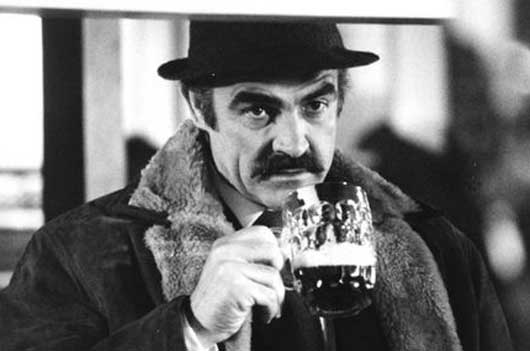
Connery again, completely cast against type as Johnson – a detective under pressure who beats a suspect to death whilst questioning him. ‘The Offence’ (1972) is a film by Sidney Lumet and evidences that director’s reputation as an auteur. What’s being examined here is the ambivalence of police work – a theme that Lumet would explore further in ‘Serpico‘, ‘Prince of the City’ and ‘Q&A’.

I watched this film again recently and Lumet’s direction of the two protagonists, Connery and Ian Bannen, is flawless. As the narrative intensifies, these two men, on opposing sides of the law, become increasingly indistinguishable. Ultimately, Johnson’s quest for truth brings forth a malignant guilt in himself. There is no redemption.  Connery made this film ‘under sufferance’ from United Artists who agreed to allow him to do it as part of the deal for him to return to the Bond franchise in ‘Diamonds are Forever’. It was a box office failure when released and has only recently been given a DVD release. I urge you  to see it.
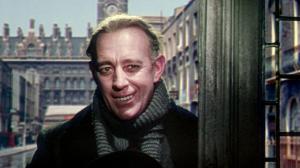
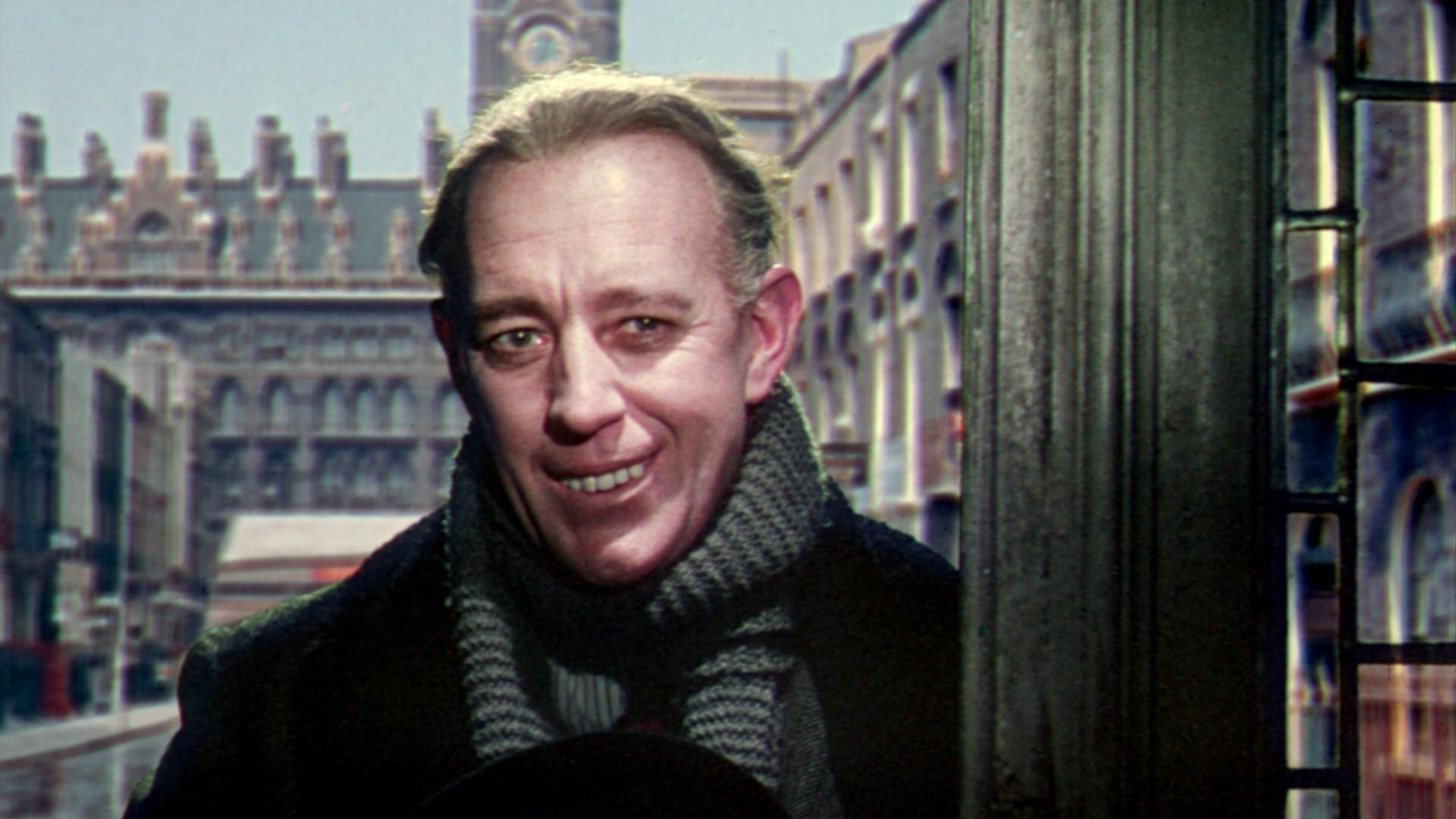
‘The Ladykillers’ (1955) is a black comedy directed by Alexander Mackendrick and starring Alec Guinness. The film provides an early role for Peter Sellers and also features the ubiquitous Herbert Lom, who specialised in crime lords and shady types. Guinness plays a sort of faux criminal mastermind who, together with his gang of incompetent robbers, is completely undone by a little old lady (Katie Johnson) whose house they lodge in whilst planning their dastardly crimes.
This is a sly movie and manages to carry off a good many public monuments and established stereotypes whilst allowing Guinness to display his comic talents –  as his character, Professor Marcus, gradually morphs into that great staple of British film comedy, Alastair Sim. (St Trinians, The Green Man, School for Scoundrels)
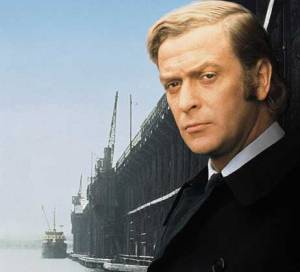
A Note From The Author
I will write about the more recent plethora of British Gangster Films shortly – but I thought readers may enjoy looking back at some of the templates for these more recent movies.