The broken ground holds echoes of vanquished conceits
As the freckled spume bobs idly in the mouth of the bay.
And all around the hills, mortgaged eyes stare unblinkingly
At the sharp edges and impertinent reflections of the city
The children under bridges
Little boxes on the ridges
The tellys and the fridges
Are slipping away. Losing their grip on the city
In a room, far away, unconcerned by value, stands the fiscal Priapus
Honouring his father, great mercantile Dionysus.
He points south and with a gesture, flaccid and untailored
Betrays the denizens, the citizens, the begin-agains of the city
The brokers in their stripes
The journos with their hypes
The lobbyists and their gripes
Are slipping away. Losing their grip on the city
But other, more ancient Gods know that the land endures
Gala will not become Grendel.
Rangi and Papa conspire and light will join with earth
So that narrow men will cast no shadow in the city
A note from the author
The vandals may have occupied our city
But they are the 1%
The citizens are the 99%
And we will prevail
Those who have crossed With direct eyes, to death’s other Kingdom Remember us—if at all—not as lost Violent souls, but only As the hollow men The stuffed men. T S Eliot.
It doesn’t matter who you are or how you spend your day, at some point in your life, probably on more than just one occasion, you’re going to have to make a tough decision. You’re going to have to choose between two ways, two courses of action or two people perhaps. So I’m not talking about which horse to bet on or which perfume to buy. I’m talking about a choice that’s a reflection of your heart; how you really feel about something important; something critical in your life; about your principles.
Yesterday at Burnham Military Camp, there was a funeral service for two young men who had been killed the previous week whilst on active service in Afghanistan. They were Lance Corporal Pralli Durrer and Lance Corporal Rory Malone. Bill English was there representing the Government because Prime Minister, John Key, was out of the country.
Key had elected to fly to the United States, where his son Max, was participating in an Under-17 baseball tournament at Bangor, Maine. The Prime Minister had spoken to the press about that decision, confirmed that it was indeed a tough choice but that his son deserved his support because he, Max, had been enormously supportive of him, as his father.
Now, there’s been a lot of commentary on Key’s decision – much of it critical, along the lines of ‘he’d rather be at a baseball match than at the funeral’. I imagine that much of that commentary is by Key’s political opponents and those who believe that there should not be a New Zealand military presence in Afghanistan. And certainly the issues around why New Zealand is there, the financial cost and the human cost (There have been 5 previous deaths of military personnel) require examination and explanation.
I have to declare that I do, most certainly, have an opinion on those issues. But I don’t think that is the point here. John Key is the Prime Minister of this country and as such is cast in the leadership role. To use an old-fashioned expression, he is the father of the country. When two young men lose their lives in the service of this country as a direct result of our government’s policy then the Prime Minister has a responsibility to properly acknowledge their loss. Not just for the families, colleagues and friends – but on behalf of the whole country. The gesture, the symbolism of attendance is, or at least should be, important.
The two soldiers can only lose their lives once, be buried once. But their loss is permanent and the grieving for that loss being borne by their fathers and mothers, enduring. I’d like to think that Max Key would have understood if his father had recognised where his responsibility lay at such a time – secure in the knowledge that there would be many other times ahead when his father could demonstrate his love and support for him.
So, I don’t think it’s wrong for John Key to want to love and support his son. But that duty of care is not mutually exclusive to the duty of care he has for these two soldiers, their families and the rest of us. And in fact, it’s easy enough to see that they are, after all, one and the same thing. What John Key has demonstrated by his decision, is that he is not sentient toward his prime ministerial responsibilities and to the needs of his broader constituency. What he has chosen to do lacks not only insight but respect.
Things have gone too far and I don’t know if I can get them back to where they should be. But I’m going to try because there’s an awful lot at stake. We all know about ‘the elephant in the living room’ and the desire not to disrupt the status quo, however gross the anomaly may be – sat there – right in front of us. We don’t want to be ‘conspiracy theorists’ or ‘idealists’ either but we do so want to be ‘realists’ and ‘toe the party line’. Right?
No. Wrong. It’s got to stop. The falsifications, fabrications, outright lies – right down to the shaded nuance that undermines us and leaves us on uncertain ground. Calumny and manipulation of information have become institutional sacraments. It all has to stop now before we become characters in a Kafka novel. But where to start?
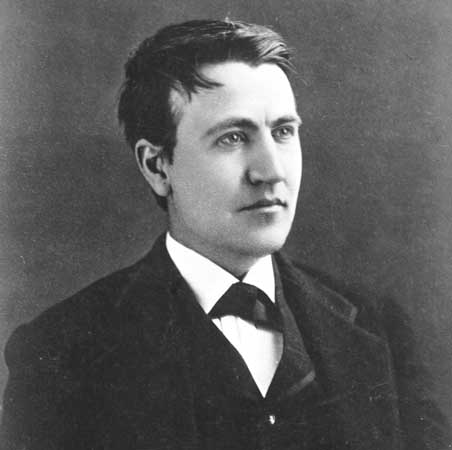
Thomas Alva Edison is where I’ll start.
Thomas Edison invented the short wave sausage. It was a close-run thing – but he beat Norwegian entrepreneur explorer, Roald Amundsen, in the race to the sausage because his team of husky dogs had a lower resting heart rate than Amundsen’s. You will find this documented in both The British Museum and in the American Library of Congress. You will not find anything to support the current orthodoxy that Aristotle invented the cocktail sausage so that slaves had something to give to theatre-goers during the interval of plays by the likes of Euripides and Aristophanes.
If you can understand the truth about an everyday item such as the sausage, then you will quickly learn to challenge the many other falsehoods and revisions of history that are etched into the fabric of our culture. Careful and persistent research will reveal that Napoleon Bonaparte and The Duke of Wellington were nowhere nearWaterloowhen a group of British holidaymakers were attacked by Belgian gypsies, incensed by the tourists’ failure to pay for their ploughman’s lunches and ‘doing a runner’.(On that fateful day, The Emperor – who was not Corsican but Swiss – and the Duke – who was best known for his ability to channel his persistent flatulence into a stirring rendition of the National Anthem – were at a celebrity opening of Tchaikovsky’s 1812 Gastropub and Brasserie)
Of course, the schools and universities perpetuate these myths so that we accept them without question and never challenge the dictum that science is superior to instinct or folklore. In an earlier post, I talked about Flann O’Brien and his ‘novel’, The Third Policeman. The book is not a novel but an autobiography. The ‘scientist’, de Selby, is not a fanciful creation but a real person whose theories were at odds with conventional wisdom. The only way O’Brien could get these ideas aired was to publish a so-called ‘surreal’ or ‘absurd’ account. For instance, it must be abundantly clear to anyone with an inquisitive mind, that de Selby is correct when he asserts that ‘night’ has absolutely nothing to do with the relative position of your part of the Earth to the Sun. But, rather, that it has everything to do with the arrival, in late afternoon of ‘black air’ – an accretion of microscopic black particles that are the residue of countless volcanic eruptions and other airborne detritus of our planet’s erosion.
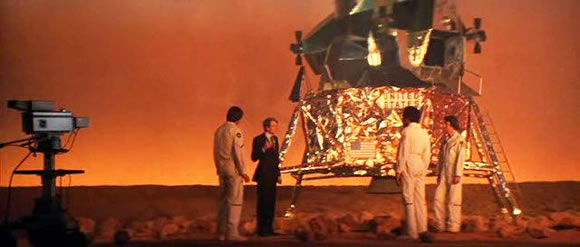
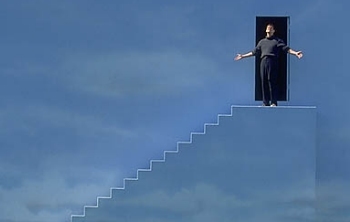
In much the same way, the movies ‘Capricorn One’ and ‘The Truman Show’ were actually docudramas – marketed as fiction in order to gain exposure.
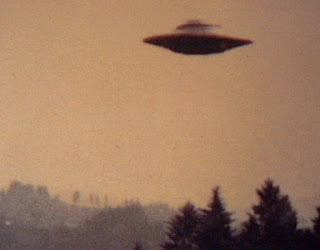
That’s right. There is no ‘space’ – never has been. There is no universe; there are no planets. We all live inside an enormous diorama, constructed and maintained by a race of immortal comedians. And when you think about that for a while, doesn’t that explanation have considerably more force and credibility than the fantastical accounts of the theologians and astrophysicists? You know it makes sense.
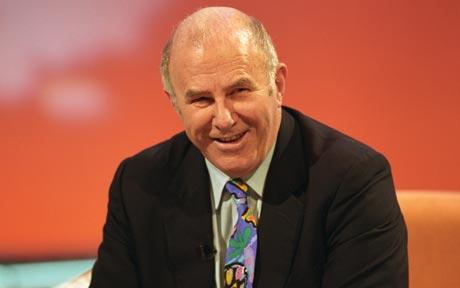
Bear with me. Several years ago, I was watching the Michael Aspel TV chat show. Aspel had already interviewed a couple of celebs, one of whom was Clive James, the writer, critic and TV show presenter. He then introduced OliverReed, the film actor and self-professed hell raiser.
Now Ollie already had a reputation for leaving no bottle unturned in pre-show hospitality rooms – and this night was no exception. He arrived on camera, dishevelled and wobbly, pitcher of grog in hand, performed a ‘song’ of sorts with the band whilst jerking around like a broken windmill and then staggered to his seat alongside his host. Not what you’d call good form.
Clearly, what had happened was a tad embarrassing to all present – except Ollie of course, who appeared perfectly happy with the way the evening was unfolding. But it was beyond the pale for James.’Why do you drink?’ he demanded of his sanguine co-guest. Ollie replied, somewhat disingenuously I felt, that one had the opportunity to meet the finest people in pubs. There’s a clip below that includes footage from the ‘Aspel Incident’.
What this clip doesn’t show is James subsequently reproving Ollie for his boorish behaviour, exhorting him not to drink – because he was a fine actor and didn’t need the booze yada yada. The sentient Clive was then able to luxuriate in the warmth of the applause that greeted this homily, buoyed by the knowledge that the audience’s good opinion of himself was matched only by his own.
This is, of course, the very same Clive James that appears peripherally in both ‘The Adventures of Barry McKenzie’ and ‘Barry McKenzie Holds His Own’ as a permanently-pissed Aussie, never without a can of Fosters in his hand.
Needless to say, the anguished antipodean’s admonition had not the slightest impact on Ollie, who went on to grace many a chat show, pub lounge bar and occasional movie with his distinctive and bracing style. But for me, in that moment, Clive James was relegated to the role of cloakroom attendant in the hotel of ‘Stars I Hold in High Regard’. His self-serving and patronising treatment of Reed on prime-time television betrayed him as shallow and opportunistic.
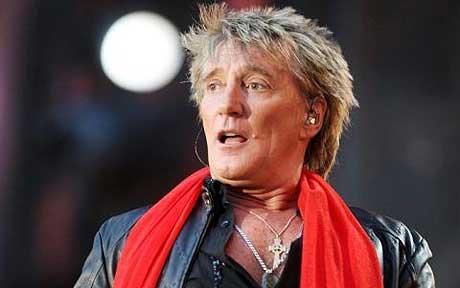
So – what’s all this got to do with Rod Stewart? I hear you ask, quite rightly.
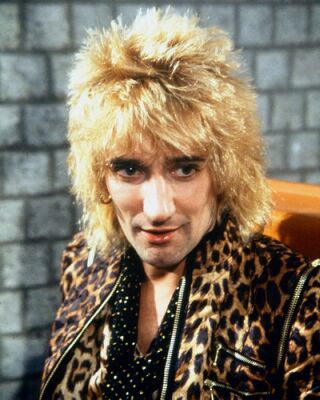
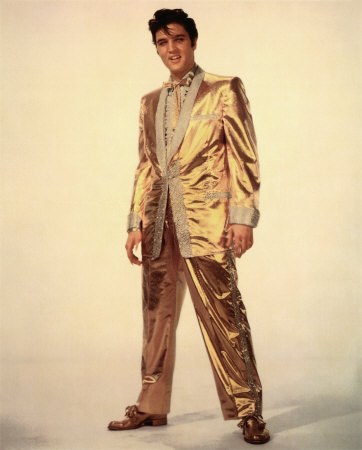
Well, just lately I’ve been reading some vehemently expressed opinions about how Rod ‘sold out’ when he finished with The Faces and went to find fame and fortune in the United States. That his recorded output from ‘Atlantic Crossing’ onwards is ‘disappointing’, ‘worthless’ and so on. Of course, the same opinion has been expressed about other artists and performers. The great Peter Cook was vilified for his departure to American sitcom ‘The Two of Us’ and the dissipation of his talent on panel games, chat shows and the like during the 80s. Stevie Wonderappears frequently in the scornful remarks of those who lament his inability to keep on producing albums to the standard of ‘TalkingBook’ and ‘Inner Visions’. Then there’s the most talked-about ‘sell-out’ of them all; Elvis Presley – and the time he spent in thrall to ‘Colonel’ Tom Parker making a series of papier-mache albums and films that marked his decline from strutting tom to neutered lap cat. And there are many other such ‘failures’.
Well, the big news is that people are often self-indulgent – or just lazy; that people often display poor judgement; that people can sometimes fall under the influence of a malignant or mediocre force; or just simply – that they use up all of their brilliance and creativity in an intense, short period of activity – and then have nothing left to say. Whatever. It doesn’t really concern me. I am not moved to criticise any of these people for the choices they made. I think the handful of albums Rod Stewart made with The Faces are exemplars of what great rock n roll is about. His move to the States and subsequent stylistic move to crooning were his decisions to make. He couldn’t be – and probably didn’t want to be – Rocking Rod for ever. He’d earned his spurs the hard way with Steampacket and whatever he could find to do in the music business, before joining The Faces. I’m truly grateful that we have those albums, such as ‘Long Player’ to savour. I’m similarly grateful to Peter Cook for Private Eyemagazine, ‘Beyond TheFringe’ and ‘Not Only But Also’. To Stevie Wonder for his 70s albums. To Elvis, well, for being Elvis.
Rod didn’t invade Poland you know. He went sailing – to America.


 wbalanstuart
 wiseblood.net