Monthly Archives: July 2015

A Very British Music

What kind of fool am I that sits on a hill?
Well well well, I won’t get fooled again
Shattered as I am, I’ll pick up the pieces
Because I’d like to spend my life
With a girl like you
Lola

Baby please don’t go into the mystic
Baby come back
To your little tin soldier
Your man of the world
Yeah, yeah – walk right back
Alison

I’ve never known a girl like you before
You are so beautiful to me
How do you do what you do to me?
I, who have nothing
But a ticket to ride on the carousel, the roundabout
Ruby Tuesday

I’m a hog for you babe
I’m a gnu, a g-nother gnu
And I love my dog more than I love you
When that albatross flies
All around my hat
Jean genie

Over bridge of sighs
To rest my eyes
With a head full of snow
The L.S. bumble bee and the hurdy gurdy man
Would love to turn you on
Lucy

96-who

Rimbaud/Rambo Homophone Blues

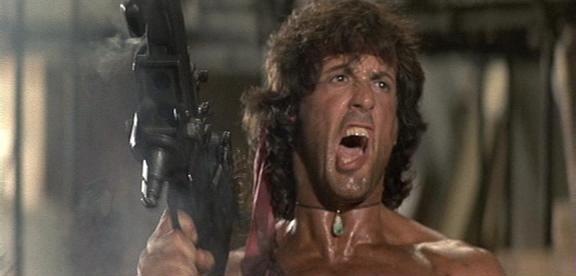
rambo-first-blood-part-ii

Gracious son of Pan! Around your forehead
crowned with flowerets
and with laurel, restlessly roll
those precious balls, your eyes.

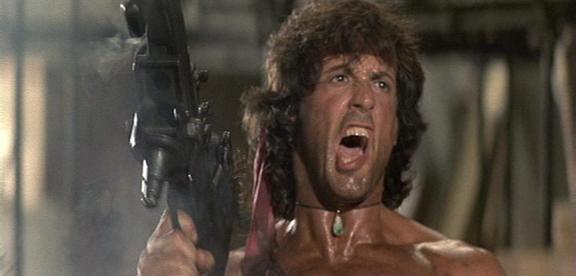
Nothing is over! Nothing! You just don’t turn it off! It wasn’t my war! You asked me, I didn’t ask you! And I did what I had to do to win! But somebody wouldn’t let us win! And I come back to the world and I see all those maggots at the airport, protesting me, spitting. Calling me baby killer and all kinds of vile crap! Who are they to protest me? Who are they? Unless they’ve been me and been there and know what the hell they’re yelling about!

Spotted with brown lees, your cheeks are hollow.
Your fangs gleam. Your breast is like a lyre,
tinklings circulate through your pale arms.

For you! For me civilian life is nothing! In the field we had a code of honor, you watch my back, I watch yours. Back here there’s nothing

Your heart beats in that belly where sleeps the double sex.
Walk through the night, gently moving that thigh,
that second thigh, and that left leg.

Back there I could fly a gunship, I could drive a tank, I was in charge of million dollar equipment, back here I can’t even hold a job parking cars!

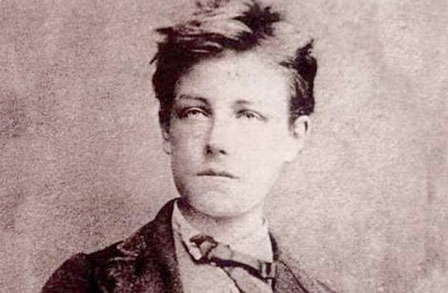
rimbaud-448

Author’s Note
It occurred to me that we pronounce the names Rimbaud and Rambo pretty much the same way – and I was tickled by the incongruity of the connection. I have folded Rimbaud’s poem ‘Antique’ in with Rambo’s lament from the movie ‘First Blood’ and I found that the synthesis produces an eerie integrity.

Class Act

sean_penn2b

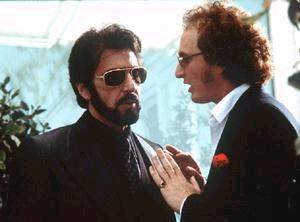
I’ve been watching a few movies at home just recently. A bit of a mixed bag but amongst them, ‘Carlito’s Way’.  (Brian De Palma 1993) I like to think that most people would agree that this is a very fine piece of film making. Al Pacino and Sean Penn play the leads, Carlito Brigante and Dave Kleinfeld. The action takes place in New York’s Spanish Harlem during 1975. Brigante has been released from prison after 5 years of a 30 year term because Kleinfeld, his lawyer, has discovered some technical deficiencies in the original case against him. As we are shown the film’s conclusion right at the beginning of the narrative, we are left in no doubt how it will all end for Carlito.

There’s much skill required from the director and scriptwriter to tell a story this way and still keep the audience wholly involved throughout the film – which is nearly 2 and a half hours by the way. And the direction and script are brilliant. But there’s more to it than that.
What Pacino and Penn bring to the screen is a sense of their characters’ history – their ontological existence if you like. Brigante and Kleinfeld existed before you sat down to watch the movie. What is happening to them now has its origins in the past and the way they have led their lives –  the decisions they have made. These actors have to find a way to convey the full extent of that past and how it impacts on the present in order for us, the audience, to agree to the compact with the film’s makers and suspend disbelief while the story unfolds. Pacino and Penn achieve this brilliantly. Their characters are transparent to us. The actors place nothing between themselves and the audience. Nothing is told but all is revealed. There is art but no artifice.
So we are in safe hands here. We can allow our critical faculties to take a break and use them later to engage with what we’ve seen and heard.

When I see acting of this quality, though, it brings into sharp relief, for me at least, the different types – or styles – of contributions that are made up there on the screen. Not everyone’s an actor. Not everyone can act. And quite often it’s not really necessary that they do. Some perform. And some just do impersonations or impressions of the characters they’ve been asked to play.

For instance, I think that Arnold Schwarzenegger is a performer, not an actor. And that’s okay. The films that he makes are vehicles for his particular talents and his on-screen presence. Hard to imagine ‘The Terminator’ being anyone but Arnie, isn’t it? It’s a matter of degree with performing though. Arnie’s right at the top of that list but there are hundreds of performers who tilt their lance at the windmill of acting. Amongst these notables I count Laurence Olivier, who never, in my experience, was able to impart a sense of an inner life to any of his characters. He seemed to me always to be an empty vessel perpetually in character but with no personal stake in the role. The Peter Sellers of tragedians, far exceeded in talent and capability by Gielgud, Richardson and Scofield from that generation.

Then there are the impersonators. Those who have a trick bag full of affectations, ticks, twitches, half-smiles and phony accents to gull the movie-going audience into believing the sincerity of their impersonation of a character. Meryl Streep is top of that list. From Lindy Chamberlain to Margaret Thatcher, Streep has cobbled together a battery of mannerisms and expressions that have made her utterly unwatchable for me since ‘Kramer vs Kramer’. John Malkovich and Philip Seymour Hoffman are equally as annoying and tiresome. All of these simply cannot stop acting. Their presence is eternally informed by their duty to acting. If they say one thing to me it is, ‘Look at me, Look at me. I’m an actor. I’m acting now.’ They make me want to reach for something with Gene Hackman or Vanessa Redgrave, Jessica Lange or Brendan Gleeson. Something like ‘Carlito’s Way’.

rambo-first-blood-part-ii


I Can’t Believe He Just Said That – A Very Short Story

This story is dedicated to my friend, Colin Coke, the artist and Son of Cornwall, who shares with me a fondness for such confections.
375780

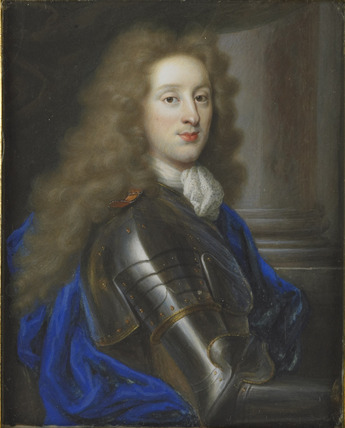
In late 1701, Archibald Campbell, the recently created 1st Duke of Argyll, was dealing with a rather tricky family problem. Archibald had handily switched allegiance from James II to William of Orange a few years earlier and was now the King’s principal advisor on all things Scottish. He had made a brilliant marriage with Elizabeth Tollemache, daughter of a Baronet, and together they had three children, the eldest of whom, John, was the source of their concern.

John had celebrated his 21st birthday in October 1701 and had set about earning the reputation of a profligate with imagination and vigour. He had become a regular patron of the fashionable gaming tables of Edinburgh and in short order had racked up debts in excess of 10,000 guineas – a small fortune at that time. Most of the markers held against this debt were in the possession of James Hamilton, 4th Duke of Hamilton, Scotland’s first peer and a bitter rival of the Argylls. John swore to his father that Hamilton was a practiced card sharp, particularly at Quinze, an early form of ’21’, and produced witnesses to back up his version of events.

This placed Argyll in a cleft stick. He was angry with John but had to support him. But he didn’t want to be indebted to Hamilton who he loathed and with whom he was battling for the favour of the King. What to do? His first recourse was to the powerful Morton family to act as honest brokers and see if a settlement could be negotiated. Hamilton rejected this approach out of hand and let it be known around the court that the Argylls were near bankruptcy and keeping ‘dubious company’. In so doing, Hamilton unwittingly provided his enemy with the inspiration he needed.

The Argyll family had long been rumoured as being adherents to ‘the old religion’ and it was this practice that Hamilton had hinted at. Archibald, seeing an opportunity to resolve both his son’s debt and his rivalry with Hamilton sent his factor, James Donald, to find the woman known locally as Hecate, a disciple of the witch, Jane Wenham, to see what might be done.

A week later Argyll met with Hamilton, ostensibly to negotiate, but quickly left the meeting with a handkerchief he had spirited away from his adversary. The handkerchief was taken by Donald to Hecate. In the weeks that followed, James Hamilton fell into a deep and melancholy malaise and did not venture from his bed. His family talked of visitations each night from ‘demons and faeries’ that railed and shrieked at Hamilton and accused him of ‘corrupting innocent youth’ in the cause of ambition. No treatment or hiding place could halt the spectral appearances. Finally, the rapidly wasting Duke, heeding the advice of his priest, relinquished all debts owing to him, including those owed by John, and miraculously it seemed, began to recover his health.

Of course, the kinsmen, servants and supporters of both the parties would gather in the inns and gossip about these events and the likely causes of James Hamilton’s ‘possession’, epiphany and subsequent recovery. There was much talk, too, of Archibald Campbell’s dalliance with ‘the horned one’ and his use of the black arts to free his son from debt. And that speculation reverberates even today in the Highlands where you may still hear the  adage that ‘Demons are Argyll’s best friend.’

untitled